
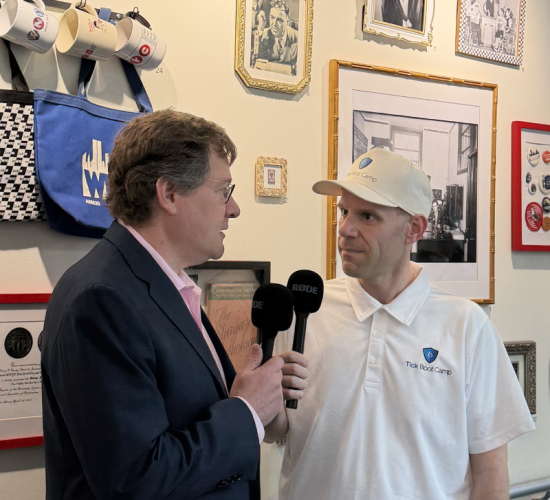
Tick Boot Camp Podcast
To dive deeper into Geoff Dow’s work and ideas, explore his interviews on the Tick Boot Camp Podcast:
- Episode 539: Geoff Dow on Babesiosis: Malaria Parallels, Tafenoquine (Arakoda), and New Clinical Trials for Chronic Tick-Borne Disease
- Episode 463: LIVE from ILADS: Dr. Geoff Dow – Tackling Babesiosis with Malaria Research
Geoff Dow, PhD
Geoff Dow, PhD, is a biotechnology executive and malaria drug development expert whose work is helping expand the conversation around babesiosis, chronic tick-borne illness, and the future of targeted treatment research.
As CEO and Board Member of 60 Degrees Pharmaceuticals, Dow is leading clinical programs exploring tafenoquine (Arakoda) for babesiosis while helping push the field toward better diagnostics, clearer case definitions, and stronger evidence for patients with persistent symptoms.
About Geoff Dow
Geoff Dow, BSc, MBA, PhD, is originally from Perth, Western Australia. He studied biotechnology as an undergraduate and went on to earn a PhD in malaria drug discovery and development.
After moving to the United States, he spent about a decade working at the Walter Reed Army Institute of Research, where he contributed to antimalarial drug development and gained broad experience in translational science, clinical development, and infectious disease therapeutics.
He later founded 60 Degrees Pharmaceuticals, where he continues to serve as CEO and Board Member. His current work brings a rare cross-disciplinary perspective to the tick-borne disease space by applying lessons from malaria drug development to babesiosis research.
Research Focus
Geoff Dow’s work focuses heavily on babesiosis, one of the most under-recognized infections in the tick-borne disease community. His research explores the biological parallels between Babesia and malaria, especially their shared relationship to red blood cells and the types of symptoms that can result from red cell destruction.
He is particularly interested in how these similarities may open the door to new therapeutic approaches, including the study of tafenoquine, an FDA-approved malaria prevention drug, as a possible tool for babesiosis treatment.
His work also reflects a growing recognition that many patients with chronic tick-borne illness are not dealing with a single infection. Instead, they may be navigating a more complex polymicrobial picture involving Babesia, Borrelia, Bartonella, and broader immune dysregulation.
Why Geoff Dow’s Work Matters
Babesiosis is often discussed less than Lyme disease, yet it may play a major role in fatigue, air hunger, anemia, and ongoing illness in many patients. Dow’s work matters because it helps bring scientific structure to an area where patients have long reported persistent symptoms but research has lagged behind.
Rather than ignoring complexity, his approach acknowledges that chronic illness may involve persistent infection, immune dysfunction, or both. His research aims to build a clearer path from anecdotal experience to measurable evidence.
Key Areas of Interest
Babesiosis and Malaria Parallels
Both Babesia and malaria are parasites that infect red blood cells. Because of that, they can share certain biological features, symptom patterns, and drug targets. This scientific overlap helps explain why antimalarial compounds may have relevance in babesiosis research.
Tafenoquine (Arakoda)
One of Dow’s most notable research interests is tafenoquine, marketed as Arakoda for malaria prevention. Its distinct mechanism of action makes it especially important in babesiosis research, where treatment resistance and limited therapeutic options remain major concerns.
Chronic Babesiosis
Dow is helping push the field to think more seriously about chronic babesiosis and persistent symptoms in patients who do not fit a simple acute-disease model. This includes people dealing with disabling fatigue, air hunger, anemia, or overlapping chronic tick-borne conditions.
Coinfections and Polymicrobial Illness
His work recognizes that many chronically ill patients may be contending with more than one pathogen. That reality makes both diagnosis and treatment more difficult and highlights the need for more clinically relevant research models.
Diagnostics and Validation
A central part of Dow’s work is improving how babesiosis is defined and tracked. Reliable diagnostics are essential not only for identifying patients, but also for measuring treatment response and moving the field toward stronger scientific consensus.
Clinical Research and Trial Development
Geoff Dow is helping lead clinical efforts to evaluate tafenoquine in babesiosis, including research focused on chronic illness. One key study discussed in his Tick Boot Camp interviews involves a Mount Sinai clinical trial designed for patients with chronic babesiosis symptoms and disabling fatigue.
The trial is notable not only because it studies a potential new treatment option, but also because it aims to validate diagnostic methods and better define what chronic babesiosis looks like in a real-world patient population.
Study Highlights
- Population: Patients with chronic babesiosis symptoms and disabling fatigue
- Treatment Approach: Tafenoquine with a loading dose followed by weekly dosing over several months
- Main Goal: Measure improvement in fatigue and quality of life
- Additional Goal: Compare molecular testing methods to better understand infection and response
Focus on Chronic Tick-Borne Disease
A defining feature of Dow’s research perspective is his willingness to engage seriously with chronic illness. While much of conventional infectious disease research remains centered on acute disease with easily defined case criteria, his work reflects the reality that many patients continue to suffer long after initial infection.
This includes attention to infection-associated chronic illness, immune dysregulation, lingering symptom burden, and the possibility that persistent microbial activity may contribute to prolonged recovery in some patients.
Why Patients, Clinicians, and Researchers Follow His Work
- He brings deep experience in malaria drug development to babesiosis research
- He is helping investigate tafenoquine as a potential tool for chronic babesiosis
- He acknowledges the complexity of coinfections and chronic illness
- He emphasizes the need for better diagnostics and better-defined case criteria
- He is working to move the field from unanswered questions toward actionable evidence
Explore More from Tick Boot Camp
Tick Boot Camp highlights doctors, researchers, and advocates who are helping the Lyme and tick-borne disease community move forward with better understanding, validation, and hope.