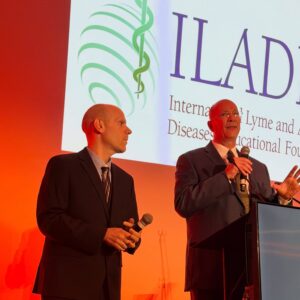
In this special Tick Boot Camp Podcast conversation recorded for Dr. Bill Rawls’ Vital Plan Network as part of the Cellular Healing Boot Camp Series, Tick Boot Camp co-hosts Matt Sabatello and Rich Johannesen join Liza Blas (Vital Plan Network Community Manager) to unpack one of the most overlooked—but most transformative—parts of chronic illness recovery: rebuilding identity.
This episode serves as a follow-up to Lesson 16 in the Boot Camp (watch full lesson) and expands the framework Rich introduced in the lesson—showing how chronic Lyme disease and complex chronic illness can dysregulate not only the body, but also the mind, nervous system, and sense of meaning and connection. Together, they explore the “patterns” they’ve observed through 650+ Tick Boot Camp interviews with patients, doctors, and researchers—and how those patterns point toward a more complete roadmap for healing.https://community.vitalplan.com/
What You’ll Learn in This Episode
- Why healing from chronic Lyme disease is rarely “just physical”
- The key recovery patterns observed across 650+ patient interviews
- How identity gets disrupted by chronic illness—and how to rebuild it
- The difference between faith vs. doubt as forms of belief
- The “Big Three Lies” that shape a harmful Lyme identity
- How the nervous system, stress hormones, and immune dysfunction feed each other
- Why “it’s never just one thing” when it comes to recovery
- Practical tools for hard days: breathwork, gratitude, pacing, and nervous system support
- A step-by-step “path forward” that includes physical, psychological, and spiritual healing
Key Themes and Takeaways
1) The Tick Boot Camp Origin Story (and Why Patterns Matter)
Rich shares the moment Tick Boot Camp was born: seeing Matt go from a healthy, high-performing young man to being severely disabled by chronic illness—then watching him fight his way back. That personal crisis, combined with Rich’s own tick bite and lack of competent medical guidance, revealed a hard truth:
The real experts are the people who’ve lived the journey.
Tick Boot Camp became a platform to capture what actually works in real life—through deep, long-form interviews that expose patterns you don’t see in short appointments or isolated protocols.
2) The Biggest Pattern: Recovery Requires More Than Medicine
Matt explains one of the most important—and most triggering—lessons he had to accept:
Chronic Lyme is not only a physical illness. It impacts your nervous system, psychology, relationships, and identity.
He also highlights two massive recovery truths seen again and again:
- Believing you can heal matters, because hopelessness prevents action.
- It’s never one thing. Healing is cumulative—built through layered interventions over time.
This isn’t “it’s all in your head.” It’s acknowledging that infection changes brain chemistry, stress responses, and perception—and that those changes must be addressed as part of recovery.
3) Tick Boot Camp’s Framework: Three “Immune Systems” That Can Break Down
Rich expands the “immune system must win the day” concept from Dr. Bill Rawls’ book Unlocking Lyme, and explains how it applies beyond the body.
He argues many people experience a breakdown across three interconnected systems:
- Physical immune system: fatigue, pain, inflammation, mitochondrial dysfunction
- Psychological immune system: stress response, nervous system dysregulation, belief filtering
- Spiritual immune system: purpose, meaning, connection, and “place in the world”
The more systems involved, the more complex and longer the recovery journey can be.
4) Belief: A Two-Sided Coin (Faith vs. Doubt)
Rich explains why his early messaging triggered Matt—and what finally clarified it:
- Belief isn’t something you either “have” or “don’t have”
- Belief is always present
- It comes in two forms:
- Faith: belief you’re more likely than not to get the outcome you want
- Doubt: belief you’re more likely than not to get the outcome you don’t want
People enter the chronic illness journey carrying belief—but often it has been converted into doubt through repeated invalidation, medical dismissal, and prolonged suffering.
5) The Big Three Lies That Create “Lyme Identity”
Across hundreds of interviews, Rich says the same three narratives appear repeatedly:
- “You don’t look sick.”
- “It’s all in your head.”
- “You can’t get better.”
These lies—coming from doctors, family, society, and even internal self-talk—can form what Rich calls a “lie-dentity”: a false identity built from invalidation and survival-mode thinking.
6) Matt’s Personal Breakdown Across All Three Systems
Matt describes how, in hindsight, he was dysregulated in all three systems:
- Spiritual/meaning: loss of connection, loneliness, relationships collapsing due to cognitive disability
- Psychological: new anxiety, doom, depression, fear, hyper-control while having no control
- Physical: severe neurological symptoms including seizures, tremors, hallucinations, inability to walk properly, and crushing fatigue
He emphasizes therapy can be valuable—not because illness is imagined—but because anyone would struggle emotionally when their life collapses physically.
Practical Recovery Tools Mentioned
Nervous System Support and Emotional Bandwidth
Matt shares that HPA Balance from Vital Plan became a turning point by calming his nervous system enough to safely pursue antimicrobial healing steps. He describes it as helping him feel “normal” again—creating the emotional bandwidth needed to keep going.
He also mentions:
- Napiers Ashwagandha Root Tincture (Withania somnifera)
- Passionflower Tincture (Passiflora incarnata)
Used as-needed when overstimulated, anxious, or overwhelmed.
Cellular/Mitochondrial Recovery and Broad Support
Matt outlines a layered approach aligned with Dr. Rawls’ cellular recovery philosophy, including:
- foundational supplementation
- adaptogenic support
- mitochondrial support
- broad-spectrum herbal antimicrobial support
A Practical “Holiday” Tool
Matt notes using chlorella as a personal strategy to offset inflammation after dietary triggers—supporting his ability to recover more quickly after “human moments” like holiday dessert.
The Path Forward: A Simple Roadmap
Rich’s recommendation for moving forward begins with something many people avoid:
Step 1: Sit with it
Reflect honestly on:
- What’s happening physically
- What’s happening emotionally (stress, fear, self-talk)
- What’s happening spiritually (meaning, connection, purpose)
Step 2: Support the physical system with basics
- sleep
- diet
- gentle movement when possible
- consistent, realistic routines
Step 3: Protect the psychological immune system from “lies”
Recognize how invalidation can become internalized, and how survival-mode thinking can shut down healing physiology.
Step 4: Rebuild meaning through service and connection
Rich suggests small steps that re-establish purpose and belonging—especially for those who are still very sick. Even minimal action can restore identity and hope over time.
- Participate in LymeDisease.org‘s My Lyme Data Survey
- Volunteer with the Center for Lyme Action
- Volunteer with Lyme organizations, like Global Lyme Alliance, Project Lyme, and Lyme Warrior
“When you have a bad day, how do you keep the faith?”
Matt shares a practical approach:
- pause and breathe
- gratitude practice (family, progress, community, relationships)
- nervous system support tools when needed
Rich adds: the brain can change negatively—but also positively—and building a recovery “toolbox” helps you stay stable through inevitable ups and downs.
Why This Episode Matters
Many chronic illness conversations focus narrowly on protocols, supplements, and symptom management. This conversation zooms out to address what chronic Lyme truly disrupts:
identity, confidence, relationships, and the ability to trust yourself again.
If you feel stuck, lost, or disconnected from who you were—or who you’re becoming—this episode offers a framework for understanding why that happens and how people rebuild from it.
About Tick Boot Camp
Tick Boot Camp is a Lyme disease awareness and recovery platform built around long-form conversations with the people who know the journey best: patients who have lived it, plus the doctors and researchers working to improve outcomes. With 650+ interviews, the show documents the common patterns behind recovery and resilience.