What happens when a conventionally trained physician watches someone he loves struggle with years of unexplained, multisystem illness—and eventually discovers that Lyme disease and Bartonella may have been part of the picture all along?
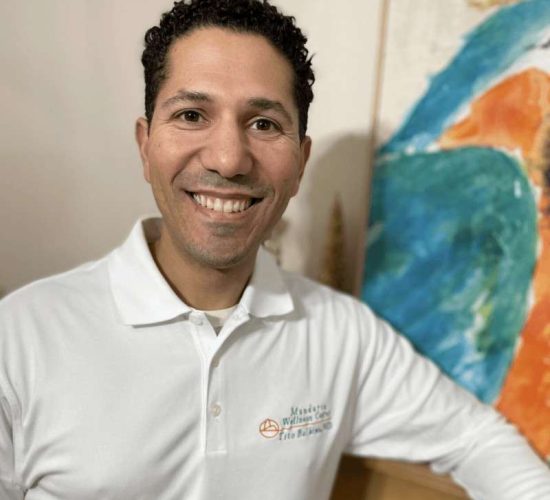
In this episode of the Tick Boot Camp Podcast, hosts Matt Sabatello and Rich Johannesen sit down with Raphael “Tito” Balbino, MD, a physician trained in Family Medicine and Geriatrics who now leads Mandarin Wellness Center, a functional and integrative medicine practice in Jacksonville, Florida.
Dr. Balbino’s path into Lyme disease and complex chronic illness was not planned.
Born and raised in Rio de Janeiro, Brazil, Dr. Balbino moved to the United States as a teenager. His fascination with anatomy eventually led him to study human biology at UC San Diego, attend medical school at the University of Illinois Chicago, and complete postgraduate training in Family Medicine and Geriatric Medicine in North Carolina.
But while his medical career was developing, something much more personal was happening at home.
When His Wife’s Illness Changed Everything
Throughout medical school and residency, Dr. Balbino watched his wife experience a changing collection of symptoms including headaches, brain fog, sleep problems, gastrointestinal issues, anxiety, fatigue, and gallbladder attacks.
The symptoms appeared across different systems and at different times. Yet despite interacting with the conventional medical system, no one seemed able to step back and identify a unifying explanation.
Dr. Balbino describes watching his wife being treated as a collection of individual problems rather than as one interconnected patient.
Eventually, she began doing her own research and exploring nutrition, gut health, anti-inflammatory strategies, and functional medicine. Dr. Balbino credits that work—particularly addressing the gut and inflammation—with helping her become substantially more functional.
Years later, Dr. Shirley Hartman helped them investigate another possibility. Testing reportedly identified evidence consistent with multiple Borrelia strains as well as Bartonella, providing a new framework through which they could reconsider decades of seemingly disconnected symptoms.
That experience would ultimately transform not only his wife’s health journey, but Dr. Balbino’s approach to medicine.
Why Lyme Disease Can Be So Difficult to Recognize
Dr. Balbino reflects on how little emphasis tick-borne disease received during his conventional medical education.
He remembers learning the classic associations—tick exposure, characteristic rashes, acute presentations—but says there was little emphasis on the epidemiology or the complicated, multisystem presentations he would later encounter in practice.
During residency, he treated a patient with an acute presentation of Rocky Mountain spotted fever, including a characteristic rash and treatment with doxycycline. Looking back, he contrasts cases like that with patients whose symptoms develop gradually, migrate, fluctuate, or involve multiple systems.
Today, Lyme-related referrals are the largest referral source at Mandarin Wellness Center, where Dr. Balbino sees patients ranging from those who have no idea why they are chronically ill to experienced Lyme patients searching for additional options.
For more conversations with physicians working in Lyme and tick-borne disease, explore the Tick Boot Camp Doctors Podcast Directory.
Lyme Disease Beyond the Northeastern United States
The conversation also explores an important misconception: that Lyme disease is primarily a Northeastern U.S. problem.
Dr. Balbino discusses his Brazilian background, his wife’s childhood exposure to rural environments in Brazil, and how learning about Lyme cases in Brazil expanded his understanding of the global nature of tick-borne illness.
He specifically references a previous Tick Boot Camp interview about Lyme disease in Brazil that helped change his perspective.
Gut Health, Inflammation, and the Nervous System
One of the most personal portions of the interview involves Dr. Balbino’s description of his wife’s experience with years of intrusive anxiety and worrisome thoughts.
He explains that counseling and other approaches did not seem to resolve those symptoms, but that significant improvement followed her work on gut health and an anti-inflammatory diet.
The conversation expands into the complex relationship between:
- gut health
- inflammation
- immune regulation
- autoimmunity
- mast cell activation
- the nervous system
- chronic stress
- neurological symptoms
More recently, Dr. Balbino says his wife has also made additional progress through nervous system training and regulation.
For listeners interested in this area, Tick Boot Camp has also explored nervous system regulation and neuroplasticity with Cathleen King of Primal Trust and Lindsay Mitchell of Vital-Side.
Building an Individualized Lyme Disease Treatment Strategy
Dr. Balbino emphasizes that patients arrive at his practice at very different stages and therefore may require very different approaches.
For acute presentations, he discusses situations where antibiotics can play an important role. For chronic and complex patients, his approach may also incorporate herbal protocols, detoxification support, organ support, nutrition, vitamins, minerals, and other functional medicine strategies.
Rather than presenting one treatment as appropriate for everyone, the discussion highlights the need to understand the individual patient, their history, their tolerance for treatment, and the factors that may be keeping them stuck.
SOT / Q-REstrain for Lyme and Tick-Borne Infections
The conversation takes a deeper dive into Supportive Oligonucleotide Therapy (SOT), which Dr. Balbino discusses under the newer name Q-REstrain.
He explains why his practice became interested in the therapy, including exposure through ILADS education and conversations with patients and families who reported significant improvements.
Matt and Rich ask Dr. Balbino to explain the therapy, how it differs from antibiotics and herbal approaches, and where he believes it may fit within a broader treatment strategy.
Listeners interested in another physician’s perspective can also hear Tick Boot Camp’s discussion of SOT with Dr. Hank Sloan.
Frequency Specific Microcurrent (FSM)
Another major portion of the episode explores Frequency Specific Microcurrent (FSM).
Dr. Balbino explains the concept of pairing specific frequencies with targeted tissues or physiological processes. He discusses using customized programs intended to address issues such as inflammation, pain, joints, ligaments, adhesions, and other patient-specific concerns.
He contrasts FSM with technologies such as TENS units and Rife-type devices and describes how patients may use programmed frequency combinations over a set period of time.
Dr. Balbino also shares patient experiences from his practice, including a nurse with longstanding pain and arthritis who incorporated FSM into her care.
TruDOSE Platelet IV Therapy and Regenerative Medicine
The conversation also explores TruDOSE Platelet IV Therapy, a regenerative therapy Dr. Balbino has incorporated into his practice.
Dr. Balbino explains that the treatment uses a patient’s own blood, which is processed to concentrate platelets before the platelets are administered intravenously. He discusses platelets not simply in the context of blood clotting, but as carriers of growth factors and signaling molecules involved in inflammation, repair, and healing.
One aspect that particularly interests Dr. Balbino is the attempt to standardize the platelet dose. Rather than simply preparing platelet-rich plasma without knowing the exact concentration being delivered, he describes the TruDOSE process as measuring platelet levels before and after processing to provide a more individualized dose.
Dr. Balbino shares several memorable patient experiences that have shaped his interest in regenerative medicine, including patients dealing with traumatic brain injury, neurological dysfunction, chronic pain, PTSD-like symptoms, and vision problems.
One case involved a patient with longstanding neurological injuries who reported unexpected changes after treatment, including improvements in areas that had not been the original focus of therapy. Another patient with a history of traumatic brain injury and significant visual impairment reported improvements in vision following treatment.
These individual patient experiences have challenged some of Dr. Balbino’s previous assumptions about what may be possible for people dealing with longstanding dysfunction.
For a physician who originally trained in geriatrics—where much of medicine can involve managing decline—seeing patients report improvements in functions they believed were permanently lost has helped reshape the way he thinks about aging, chronic illness, repair, and healing.
From Conventional Geriatrics to Complex Chronic Illness
Dr. Balbino’s professional transformation is one of the central themes of this episode.
His wife’s health journey first opened his mind to approaches outside his conventional training. Later, his relationship with Dr. Shirley Hartman exposed him more deeply to Lyme disease, functional medicine, and complex chronic illness.
Dr. Hartman had practiced for decades before preparing for retirement, and Dr. Balbino eventually stepped into the practice she had built.
Following her passing, he describes initially feeling the enormous weight of continuing the work of a physician whose patients would tell him that she had “saved” their lives.
Over time, that pressure evolved into something different: a commitment to continue serving the community and carrying forward what he learned from her.
A Physician’s Mission to Serve
Near the end of the interview, Dr. Balbino explains how working with chronically ill patients has fundamentally changed his relationship with medicine.
Patients with Lyme disease and complex chronic illness often arrive after years of suffering, failed treatments, unanswered questions, and feeling unheard.
That experience has created what Dr. Balbino describes as almost a family environment within his practice—a community connected by a shared understanding of suffering.
His philosophy today is simple: his job is to serve the person sitting in front of him.
And if he is not the right person to help them, he wants to help connect them with someone who may be.
For patients who have spent years searching for answers, that willingness to listen, remain curious, and continue looking for options can itself be powerful.
Topics Discussed
- Dr. Raphael “Tito” Balbino’s journey from Brazil to the United States
- Medical school and training in Family Medicine and Geriatrics
- His transition from conventional medicine to functional and integrative care
- His wife’s decades-long chronic illness journey
- Lyme disease and Bartonella
- Migrating and multisystem symptoms
- Why Lyme disease can be missed in conventional medical settings
- Lyme disease and tick exposure in Brazil
- Gut health and the immune system
- Anti-inflammatory nutrition
- Intrusive thoughts, anxiety, and inflammation
- Nervous system regulation
- Mast cell activation and immune dysregulation
- Antibiotics versus herbal Lyme protocols
- Detoxification and organ support
- Supportive Oligonucleotide Therapy (SOT)
- Q-REstrain
- Frequency Specific Microcurrent (FSM)
- Chronic pain and inflammation
- TruDOSE Platelet IV Therapy
- Platelets, growth factors, and regenerative medicine
- Systemic inflammation and tissue repair
- Traumatic brain injury and neurological symptoms
- Vision changes discussed in patient experiences
- Dr. Shirley Hartman’s influence and legacy
- Physician burnout and caring for complex patients
- Faith, service, purpose, and healing
- Why individualized care matters in chronic Lyme disease