
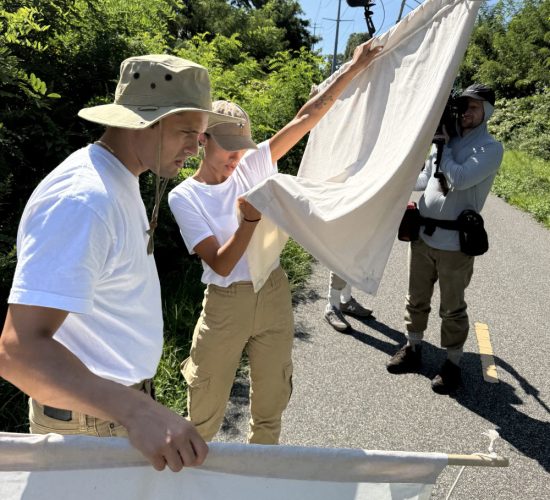
Tick Boot Camp Brings Researchers and Filmmakers Together on Long Island
A day of tick dragging across northern Suffolk County produced a troubling snapshot of the ticks living in environments where Long Islanders work, walk, bike, raise animals, and spend time at home.
But this was more than a single tick drag or an isolated research visit. Tick Boot Camp Co-Founders Matt Sabatello and Rich Johannesen coordinated an entire day of field research, educational video production, documentary filming, and in-person podcast interviews from Tick Boot Camp’s home base in Rocky Point, New York.
Matt and Rich worked with Researcher Monica Cipriani, a public health scientist and tick-borne disease researcher who is completing her doctorate; her husband, Dr. Andre Ene, an anatomic pathologist with Northwell Health Physician Partners; and Emmy Award-winning documentary director and cinematographer Reece Robinson to bring researchers, advocates, and filmmakers together on Long Island.
Robinson and audio professional Dom Aprile documented portions of the day for Ticking Point, Robinson’s upcoming feature documentary about ticks and alpha-gal syndrome. At the same time, Tick Boot Camp videographer Robert Frampton recorded educational videos that allow people around the world to see what the team encountered.
The coordinated field work took the group to three locations in Coram and Rocky Point: Malik Farms, the grassy edges of the Rails to Trails recreational path, and Rich Johannesen’s yard and an adjacent groundwater recharge basin.
The team easily encountered three medically or agriculturally important tick species: the invasive Asian longhorned tick, the lone star tick, and the blacklegged tick, commonly called the deer tick. Hundreds of larval ticks were collected during some brief drags, and multiple concentrated clusters of larvae—often called “tick bombs”—were encountered during the field work.
The most unexpected discovery occurred at Malik Farms in Coram, where Researcher Cipriani identified an Asian longhorned tick, Haemaphysalis longicornis. Finding this invasive species in an agricultural environment is concerning because Asian longhorned ticks can reproduce without males, rapidly establish populations in pastures, overwhelm individual animals in enormous numbers, and spread a potentially deadly cattle disease.
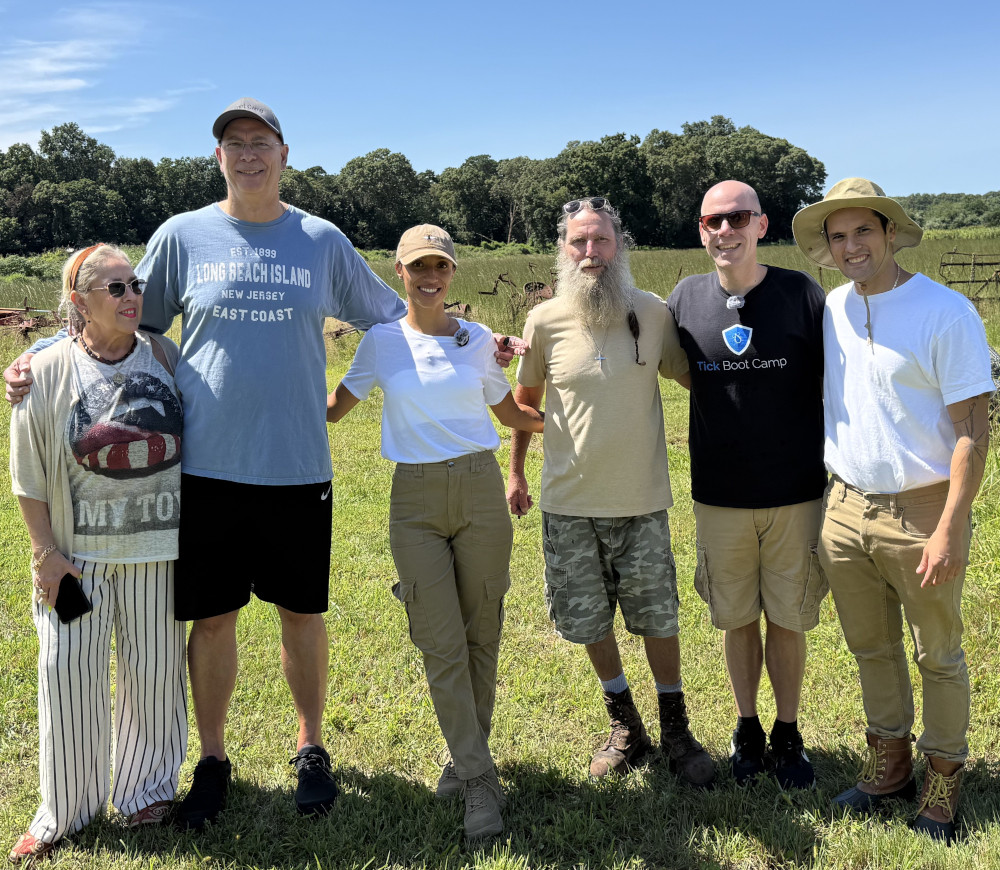
By coordinating the locations, researchers, documentary team, videography, and studio interviews, Tick Boot Camp created an opportunity to connect scientific field work with public education and patient advocacy—all within the communities Matt and Rich call home.
Behind the scenes, the day required simultaneous coordination between the scientific field team, Tick Boot Camp’s educational video production, and Robinson’s documentary crew. While Researcher Cipriani and Dr. Ene collected and examined ticks, the filmmakers worked alongside them to capture the process as it unfolded.
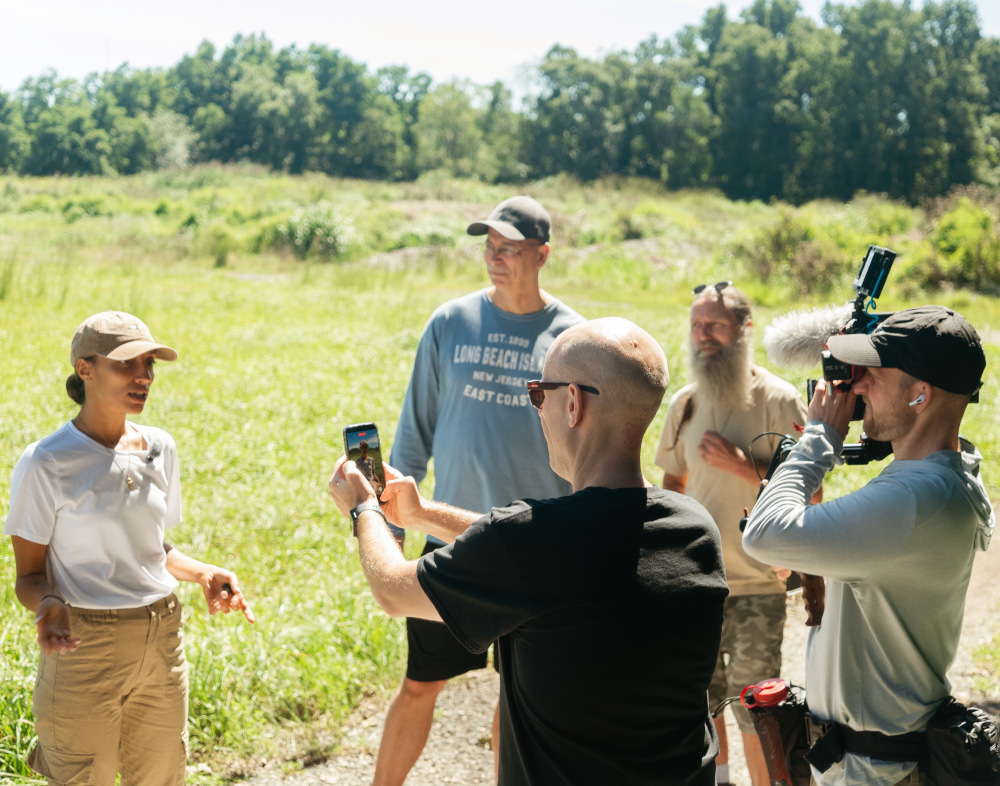
This collaboration allowed the same field work to serve several purposes: gathering information about local tick species, creating practical educational videos, documenting the growing tick threat, and preparing for longer conversations in Tick Boot Camp’s Rocky Point podcast studio.
What Is Tick Dragging?
Tick dragging is a field surveillance method researchers use to collect ticks from vegetation. A light-colored piece of fabric is pulled slowly across grass, brush, leaf litter, or the edges of wooded areas. Questing ticks waiting for a passing person or animal grab onto the material much as they would attach to clothing or fur.
Before the team began collecting ticks, Researcher Cipriani explained how a tick drag can help researchers identify the species present in a particular environment. Collected ticks may also be brought to a laboratory for additional analysis and pathogen testing.
The introductory video established the purpose of the day: to see which ticks could be found in several familiar Long Island environments and help the public better understand the potential exposure risks around farms, trails, homes, and unmanaged vegetation.
Researcher Cipriani and Dr. Ene used corduroy for the Long Island drags. Its textured surface gives the ticks’ hooked legs something to grasp. After each drag, the researchers carefully inspected the fabric and used a lint roller and fine-tipped tweezers to collect the ticks.
The lint roller was especially useful when the drag crossed a concentrated cluster of nearly microscopic larvae. Removing every larva individually with tweezers would have been extremely difficult and time-consuming.
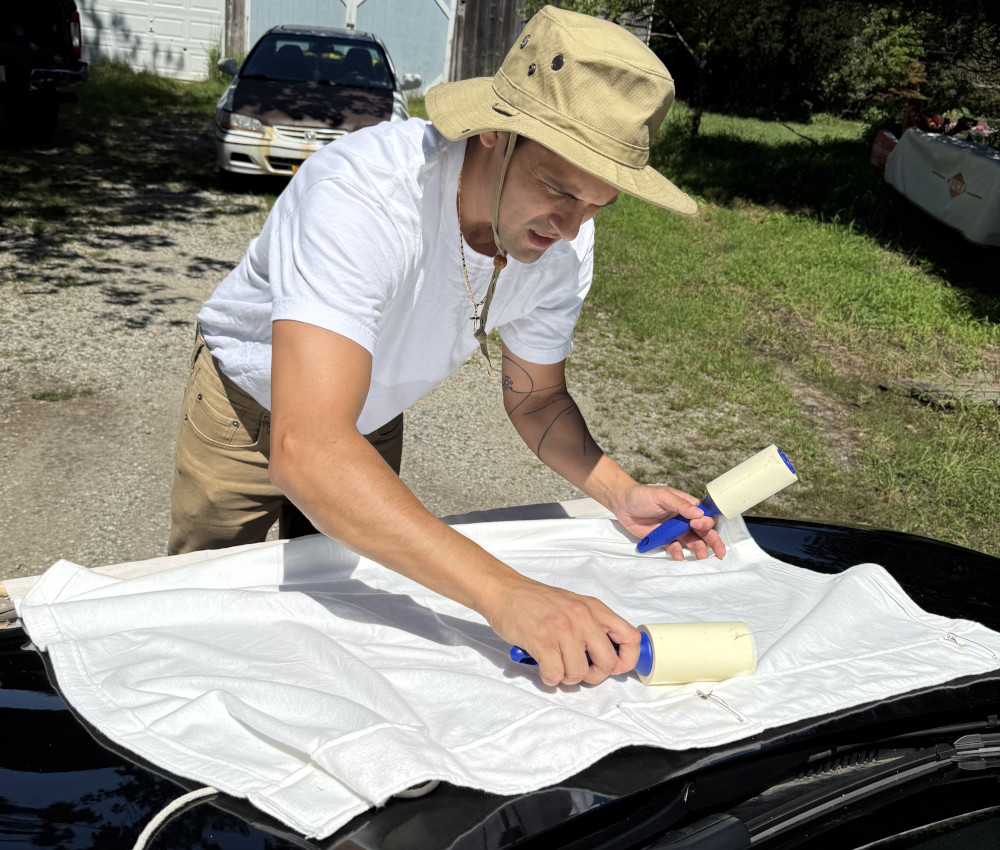
Although lint rollers can be helpful for removing large numbers of unattached larvae from clothing or field equipment, an attached tick should be removed properly with fine-tipped tweezers. The tick should be grasped as close to the skin as possible and pulled upward with steady, even pressure.
The small dots left behind on the lint roller demonstrate how easily larval ticks can be overlooked. Without magnification or close inspection, they can resemble dirt, seeds, or tiny pieces of plant material.
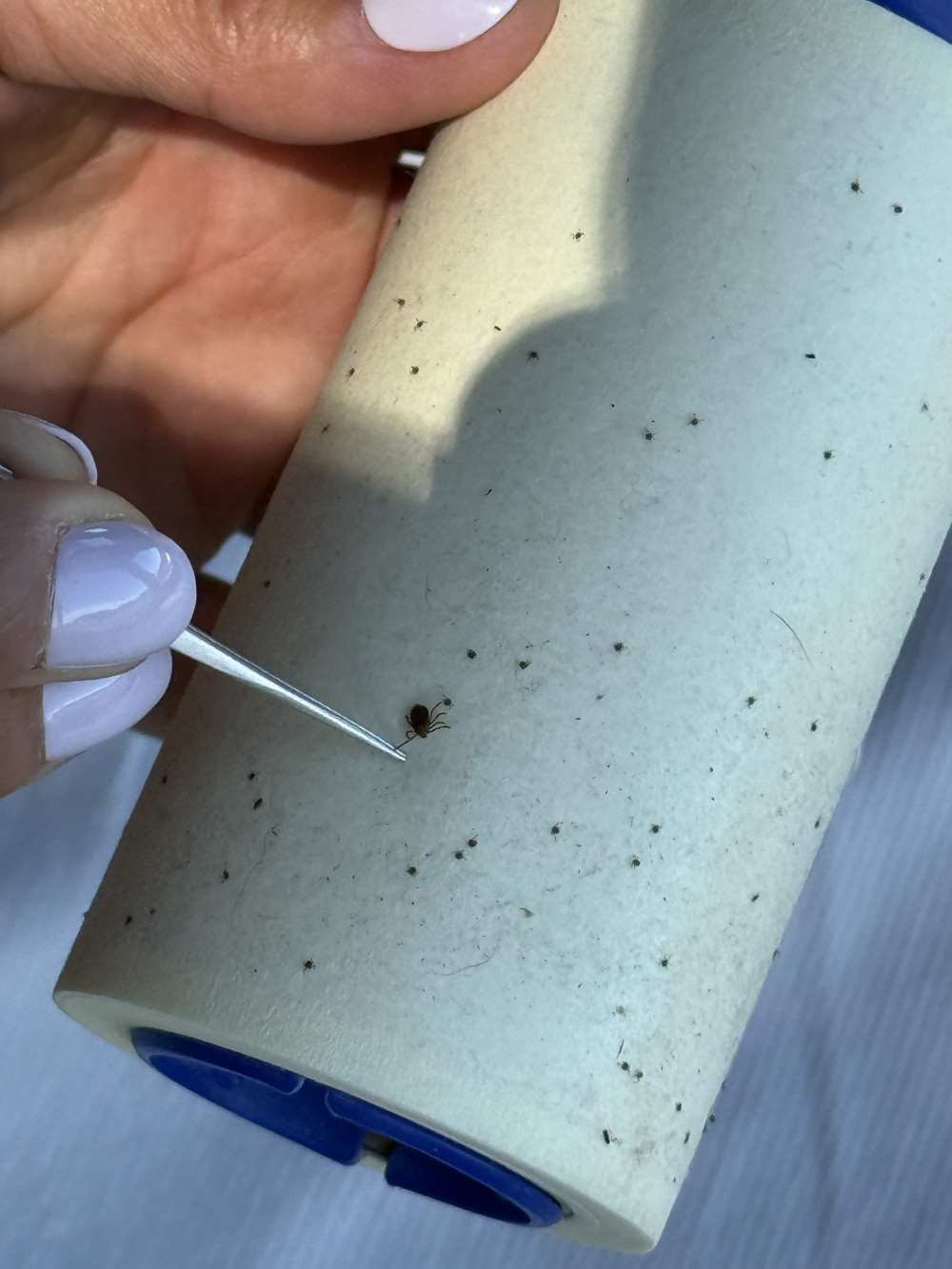
The collected specimens were placed in 70% isopropyl alcohol so they could be preserved and examined more closely. Species may be identified through physical characteristics, but visual identification alone cannot determine whether a tick carries Borrelia burgdorferi or another pathogen. That requires laboratory testing, such as polymerase chain reaction testing.
Hundreds of Larval Ticks Collected in Seconds
The speed at which the team collected ticks was striking. In one documented drag lasting approximately 10 seconds, Dr. Ene counted 16 larval ticks. Other drags lasting only a few seconds collected far more.
One container held hundreds of tiny ticks gathered from a single pass of the drag at Malik Farms. To the unaided eye, many looked like pepper scattered through the alcohol. Their nearly invisible size demonstrated why larval and nymphal ticks can be so difficult to detect on skin, clothing, pets, or livestock.
The longer video captures the scale of the field work and the moment Researcher Cipriani became covered with larvae after walking through a concentrated cluster during the first few minutes at Malik Farms.
These concentrated clusters are commonly called “tick bombs.” A female tick lays a large number of eggs in one location, and the larvae emerge together. A person or animal passing through that relatively small area can pick up dozens, hundreds, or potentially thousands of larvae at once.
Researcher Cipriani explained that the cluster encountered at the farm was not even as severe as some she had previously seen. In more extreme circumstances, a person may spend hours removing thousands of larvae after unknowingly walking through a hatching site.
During another drag, the researchers initially saw very little on the fabric from a distance. A closer examination revealed hundreds of larvae. The team also located four apparent tick-bomb areas during an early drag in the vegetation near Rich Johannesen’s Rocky Point property.
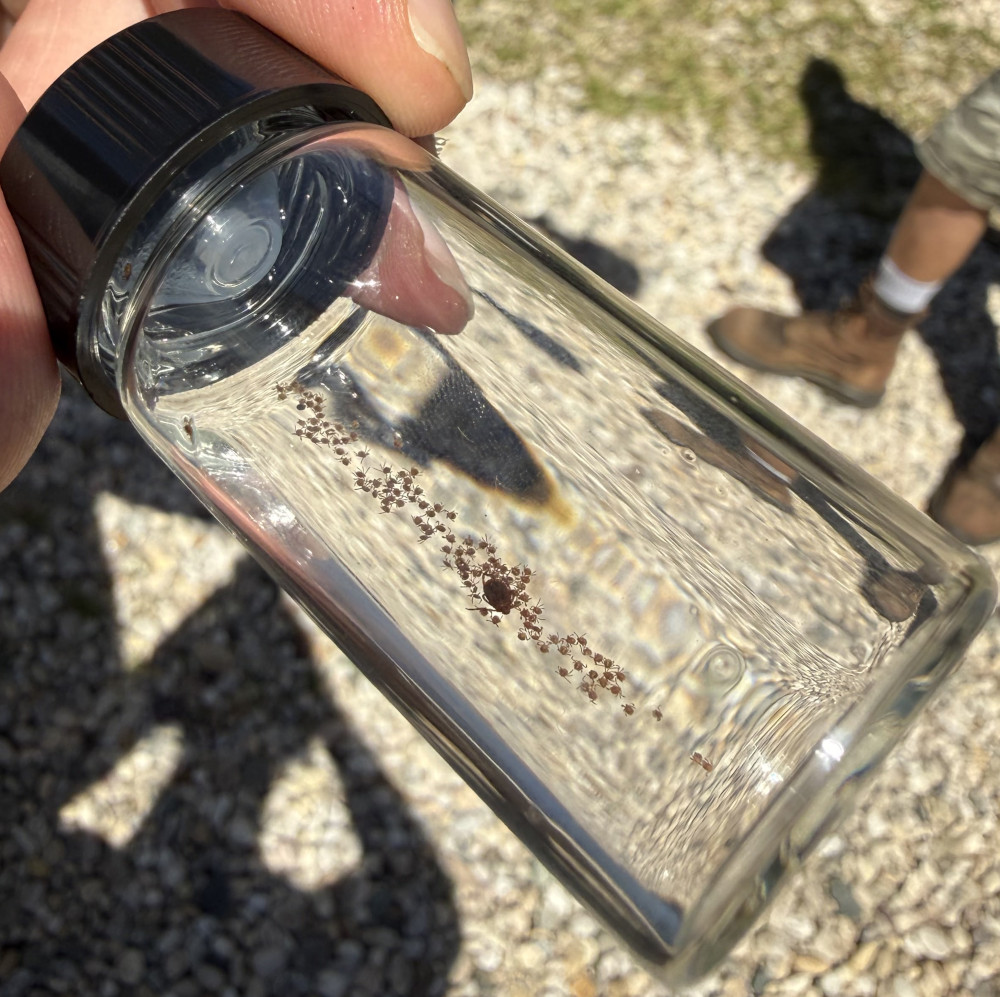
Seeing hundreds of ticks together in one container made the density of the collected larvae easier to comprehend. Each tiny speck represented a tick that had been waiting in vegetation for a potential host.
Another short video documented the ticks collected from a single brief drag at Malik Farms. The rotating container helped separate the specimens and reveal how many ticks were suspended in the alcohol.
The collection illustrates why tick exposure cannot always be measured by how long someone spends outdoors. A person may walk through the wrong patch of grass or brush for only a few seconds and still encounter a significant number of ticks.
The samples also contained ticks in different life stages. A larger nymph was visible among the much smaller larvae, reinforcing the importance of looking carefully rather than assuming every dot is dirt or every collected tick poses the same potential risk.
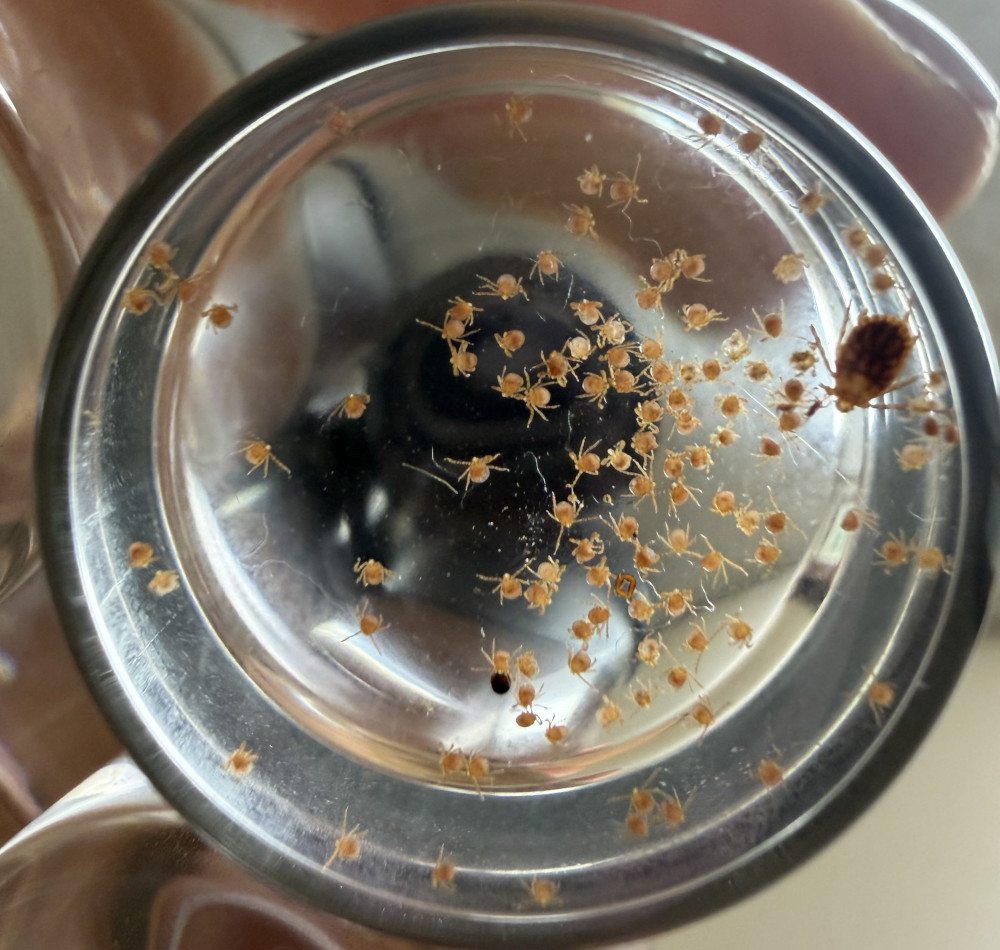
The difference in size between the larvae and nymph helps explain why careful tick checks must involve more than looking for an obvious adult tick. Larvae and nymphs can be extremely difficult to recognize without adequate lighting and close inspection.
Three Important Tick Species Found During the Field Work
The field observations showed that Long Island residents are not encountering only one kind of tick. The team identified lone star ticks, blacklegged deer ticks, and an invasive Asian longhorned tick during the day’s work.
Each species presents different potential concerns. Lone star ticks are closely associated with alpha-gal syndrome and can transmit certain infections. Blacklegged ticks can transmit the bacteria that cause Lyme disease and other pathogens. Asian longhorned ticks represent a significant concern for livestock and agricultural communities.
Lone Star Ticks and Alpha-Gal Syndrome
Lone star ticks, Amblyomma americanum, were especially abundant during the late-August drags. This species is associated with ehrlichiosis and other health risks, and its bites are strongly associated with the development of alpha-gal syndrome—an allergy to alpha-gal, a sugar present in products derived from most non-primate mammals.
People with alpha-gal syndrome can experience widely different reactions. Possible triggers may include mammalian meat, dairy products, gelatin, medications containing mammalian-derived ingredients, and other exposures. Reactions may involve hives, swelling, gastrointestinal symptoms, breathing difficulty, or anaphylaxis.
Researcher Cipriani emphasized that researchers are still working to understand why one person develops alpha-gal syndrome after a tick bite while another person does not. Differences in tick saliva, the circumstances of a bite, repeated exposure, and each person’s immune response may all warrant further study.
The role of larval lone star ticks in alpha-gal sensitization also requires additional research. Although larvae can bite people and possess salivary glands, the team did not present larval transmission of alpha-gal syndrome as a settled scientific conclusion. The videos document this as an important research question, not a proven outcome of every larval bite.
Because many of the collected larvae were so small, Matt asked Researcher Cipriani how she could distinguish lone star tick larvae from blacklegged tick larvae.
Researchers can distinguish lone star larvae from blacklegged tick larvae by examining characteristics such as body color, shape, translucency, and anatomical structures. Researcher Cipriani explained that blacklegged larvae tend to have a more translucent gray or clear lower body, while the collected lone star larvae appeared more solid, amber-colored, and rounded.
Correct species identification is important because different ticks are associated with different diseases and health concerns. However, identification by appearance does not establish whether a particular tick is carrying a pathogen.
Blacklegged Deer Ticks and Lyme Disease
The team also identified blacklegged ticks, Ixodes scapularis, including a nymph collected near Rich Johannesen’s home. Blacklegged ticks can transmit the bacteria that cause Lyme disease along with other pathogens.
Nymphs present a significant public health concern because they have already taken a previous blood meal and may have acquired pathogens, yet they remain extremely small. A nymph may be approximately the size of a poppy seed and can easily remain unnoticed while attached.
Researcher Cipriani displayed the blacklegged tick nymph on her hand so viewers could understand how small it was compared with familiar features of human skin.
The nymph’s size helps explain why this life stage is associated with many Lyme disease infections. An adult tick is more likely to be noticed and removed, while a nymph can remain concealed behind a knee, near the scalp, around the waist, or in another warm area of the body.
A close-up comparison of a lone star tick and blacklegged tick further demonstrated how small these specimens were. Even when someone is actively looking for ticks, identification can be challenging without magnification.
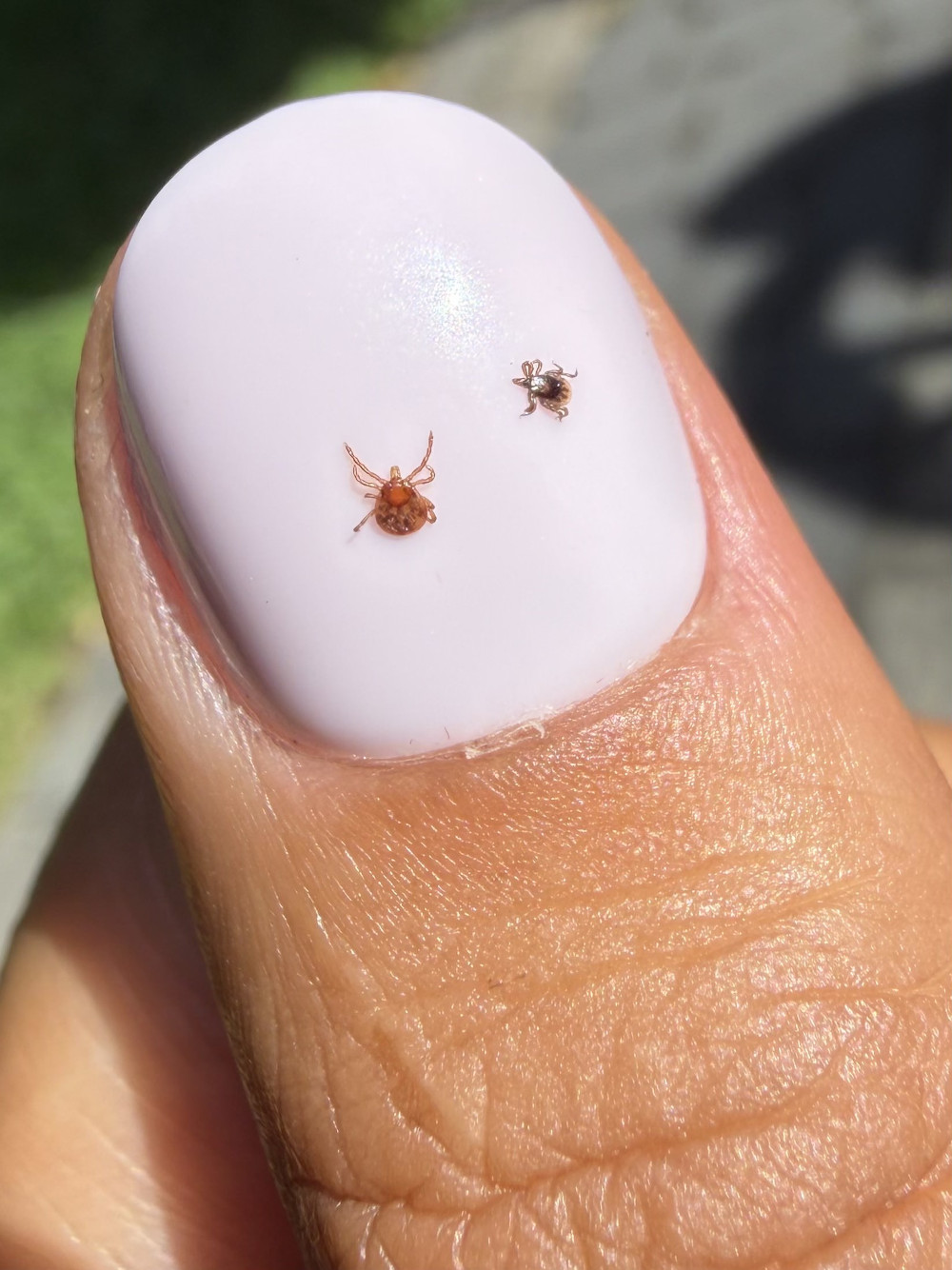
The discovery of both species during the same day reinforces why Long Island residents should be aware of more than Lyme disease alone. A single outdoor environment may contain ticks associated with different infections, allergic conditions, and health risks.
Why Lone Star Ticks Dominated the Late-August Collections
Finding more lone star ticks than blacklegged ticks during these particular drags does not demonstrate that alpha-gal syndrome has overtaken Lyme disease on Long Island. Researcher Cipriani explained that tick activity depends on species, life stage, habitat, temperature, moisture, and season.
The hot, humid, brushy environments visited in late August were favorable for lone star larvae. Blacklegged ticks often favor moist leaf litter and may be more conspicuous at other points in their seasonal cycle.
Matt asked Researcher Cipriani whether the large number of lone star ticks represented a permanent change or whether the results could be explained by the time of year and the environments being sampled.
Researcher Cipriani explained that the late-August findings were consistent with lone star tick seasonality. Returning to the same locations during a different month could produce a different mix of species and life stages.
The results therefore represent what the team encountered at specific locations and times—not a comprehensive estimate of the relative populations of every tick species across Long Island.
An Invasive Asian Longhorned Tick Found at a Coram Farm
Among all the ticks collected during the day, one of the most consequential findings was an Asian longhorned tick from Malik Farms in Coram. Researcher Cipriani identified the specimen after examining the collected ticks under magnification.
Also known by its scientific name, Haemaphysalis longicornis, the Asian longhorned tick is native to East Asia and is invasive in the United States.
The species was first confirmed in the United States on a sheep in New Jersey in 2017. Investigations indicate that it may have arrived earlier, but the 2017 discovery marked its first confirmed detection. It has since been documented in numerous eastern states, including New York.
Its presence at a Long Island farm is important because this is primarily a livestock threat. Asian longhorned ticks favor habitats such as pastures and meadows and can feed on cattle, sheep, goats, horses, wildlife, pets, and occasionally people.
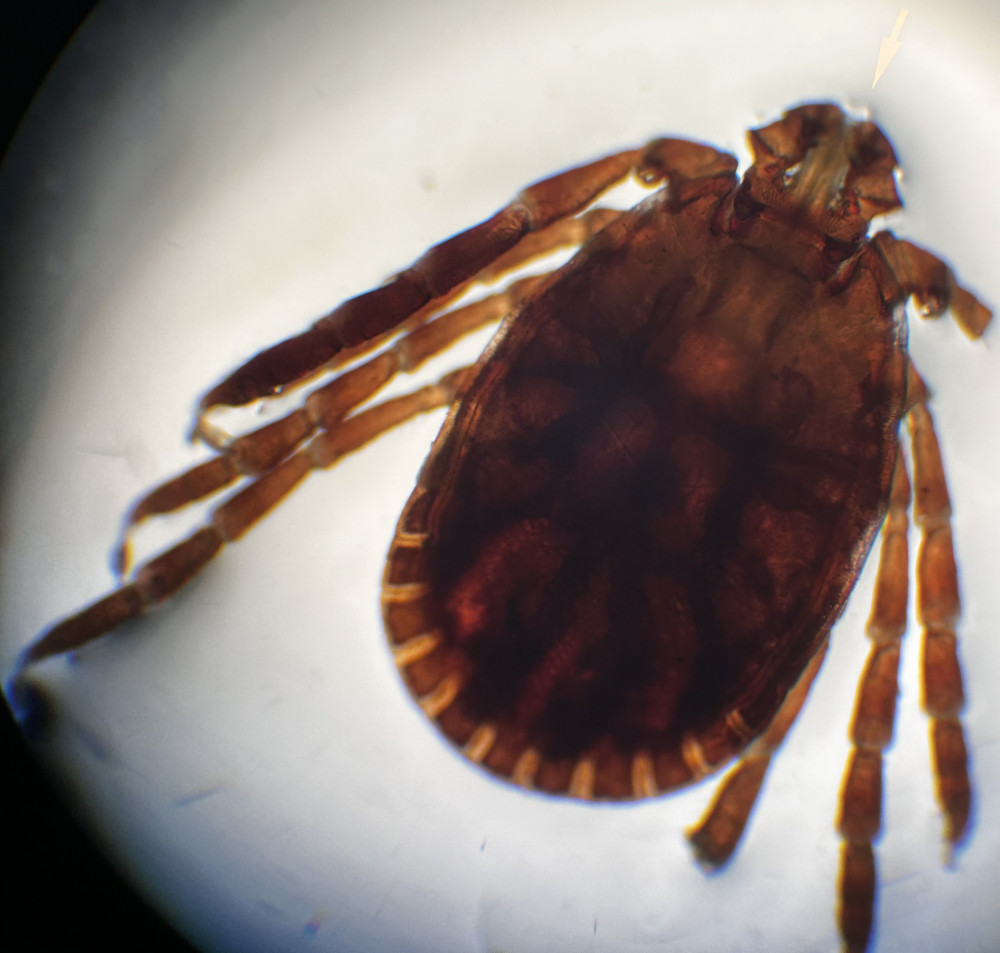
The microscope image provided visual confirmation of a species many Americans had never heard of before its relatively recent recognition in the United States. Unlike the more familiar deer and lone star ticks, the Asian longhorned tick presents a particularly serious concern for livestock operations.
One Female Can Establish an Entire Population
Asian longhorned ticks can reproduce through parthenogenesis. In practical terms, a female does not need to mate with a male before producing viable eggs. One female can lay as many as approximately 2,000 eggs, allowing a new population to become established from a single introduced tick.
This reproductive ability distinguishes the species from many familiar local ticks and helps explain why infestations can expand rapidly. Males are rare in invasive United States populations, yet the ticks can continue multiplying.
Threat One: Massive Infestations and Severe Blood Loss
Asian longhorned ticks can swarm an individual animal in extraordinary numbers. Hundreds or thousands may feed on the same animal at once. The cumulative blood loss can cause severe anemia, weakness, reduced growth, lower milk production, stress, and—in extreme infestations—death.
Calves, sheep, goats, and other vulnerable animals may be particularly endangered when infestations are not discovered promptly. Cornell Integrated Pest Management reports that livestock deaths associated with Asian longhorned tick infestations have occurred in the United States.
Because Malik Farms is located near other agricultural properties, identifying the tick in this environment raises concerns extending beyond one collection location. Wildlife, pets, equipment, livestock movement, and people can potentially carry ticks between suitable habitats.
The finding warrants vigilance by nearby farmers and livestock owners, although additional surveillance would be needed to determine the species’ broader distribution in the surrounding area.
Threat Two: Bovine Theileriosis
The Asian longhorned tick is the primary tick vector of Theileria orientalis Ikeda, a microscopic parasite that attacks cattle’s red blood cells and causes bovine theileriosis.
Infected animals may develop anemia, fever, weakness, jaundice or pale mucous membranes, reduced appetite, difficulty breathing, reduced milk production, reluctance to walk, pregnancy loss, or death. Pregnant heifers and calves may be especially susceptible. Cattle that survive can remain carriers for life.
The United States Department of Agriculture reports that there is currently no approved treatment for bovine theileriosis in the United States. This makes preventing tick exposure, detecting infestations early, and working with veterinarians especially important.
Livestock owners who observe unusual ticks, large infestations, anemia, weakness, reduced production, or other concerning symptoms should contact a veterinarian and the appropriate animal-health authorities. Tick identification should be confirmed by a qualified laboratory or identification service before conclusions are drawn about a farm’s infestation status.
Learn more from Cornell Integrated Pest Management’s Asian longhorned tick resource and the USDA bovine theileriosis information sheet.
Daily Tick Exposure Is Already Part of Life at the Farm
For Malik Farms owner James “Jim” Malik, tick exposure is not an abstract concern. He told Matt that finding ticks on himself has become a regular part of working outdoors and estimated that he had removed approximately 20 ticks during the season.
Jim described showering and checking himself at the end of the day as essential during the summer. He was familiar with Lyme disease through a friend but had not previously learned much about alpha-gal syndrome.
His experience illustrates why agricultural workers may face repeated exposure. Farm work places people in grass, brush, pasture edges, animal areas, and other habitats throughout the day—often during the seasons when ticks are especially active.
Jim’s firsthand account put a human face on the collection results. The ticks in the jars and microscope images represented the same daily exposure he experiences while maintaining and working on the farm.
His limited familiarity with alpha-gal syndrome also demonstrated why public education remains important. Many people understand that ticks can transmit Lyme disease but do not yet know that a tick bite may also be associated with the development of a potentially serious mammalian-product allergy.
Ticks Along the Edge of a Paved Walking and Biking Path
The team next traveled to the Rails to Trails path in Rocky Point. Although the path itself is paved, its grassy and brushy edges create potential tick habitat immediately beside areas used by walkers, runners, and cyclists.
Dr. Ene dragged the vegetation along the trail edge while Researcher Cipriani emphasized that this boundary is where exposure may occur. People do not necessarily need to hike deep into the woods. Brushing against vegetation beside a paved path may be enough to encounter questing ticks.
The video demonstrates why staying on a paved surface reduces—but does not completely eliminate—potential exposure. A person may step into the grass to allow someone to pass, stop beside the path, walk a pet along the edge, or brush against overgrown vegetation.
Two local residents encountered along the path described the extent of the problem in nearby Wading River. One resident recalled entering the woods to gather firewood and emerging with hundreds of tiny ticks crawling as high as his neck. He reported intense swelling around his ankles that required medical treatment.
The account cannot establish what species caused the reaction or whether a pathogen was transmitted, but it reinforces how easily someone can encounter a concentrated group of larvae without initially realizing what happened.
Four Tick Bombs Near a Home and Recharge Basin
The final field location included Rich Johannesen’s Rocky Point yard and adjacent property containing a groundwater recharge basin.
A recharge basin is a shallow, engineered area designed to capture stormwater runoff and allow it to move slowly through permeable soil into the underground aquifer. These basins help replenish groundwater, reduce flooding, and limit environmental erosion.
However, recharge basins can also contain grass, brush, wildlife pathways, shaded edges, and other features that may support ticks and their hosts. During the first drag near the property, the team encountered four concentrated larval clusters.
The researchers collected lone star ticks and a blacklegged tick nymph near the residential property. The finding illustrates a central lesson from the day: meaningful tick exposure can occur close to home, not only in remote forests or wilderness areas.
Watch All the Videos Recorded During the Long Island Tick Drags
The videos embedded throughout this article represent only a selection of the educational content Tick Boot Camp recorded during the field work.
View the complete YouTube playlist, “Tick Dragging on Long Island: Lyme Disease, Alpha-Gal & Tick Research”, to watch all the videos recorded during the day.
The playlist includes additional videos about tick bombs, larval and nymphal ticks, identifying lone star and blacklegged ticks, alpha-gal syndrome, Lyme disease risk, tick-dragging techniques, seasonal tick activity, local experiences with ticks, and the enormous number of ticks collected in only seconds.
Together, the videos allow viewers to follow the team from the first drag at Malik Farms through the Rails to Trails path and the residential property and recharge basin in Rocky Point.
Filming Ticking Point: A Documentary About Alpha-Gal Syndrome
Documentary director and cinematographer Reece Robinson joined the entire field day as part of production for Ticking Point, a feature documentary examining ticks and alpha-gal syndrome.
Tick Boot Camp coordinated with Robinson and Researcher Monica Cipriani to bring the documentary production and scientific field work together on Long Island. This allowed Robinson to capture researchers collecting ticks in real-world environments while Matt and Rich recorded complementary educational content for the Tick Boot Camp community.
Robinson filmed directly alongside the researchers at Malik Farms, documenting the collection process and the environments where people, animals, and ticks intersect. This gave the documentary team an opportunity to capture the science in real time instead of relying solely on interviews or staged demonstrations.

His presence also helped connect what the team was finding on Long Island with the documentary’s broader examination of lone star ticks, alpha-gal syndrome, patient experiences, and the urgent need for greater public and medical awareness.
Robinson is an Emmy Award-winning documentary director and director of photography with a decade of experience telling character-driven stories. His work has included embedding with doctors and patients at a New York City hospital for National Geographic’s The First Wave, documenting human-rights conflict in Nepal, and creating endurance documentaries such as The Run Across America and Ride to Endure.
Having spent much of his life on Martha’s Vineyard, Robinson has personally watched the tick crisis affect members of his family and the surrounding island community.
Ticking Point explores alpha-gal syndrome and the spread of the lone star tick. A single tick bite may leave a person reacting to mammalian meat, dairy, gelatin, medications, or other products containing mammalian-derived ingredients. Despite the potentially severe consequences, many patients still struggle to obtain a timely diagnosis or find medical professionals familiar with the condition.
Robinson’s presence added another dimension to the day. Tick Boot Camp was documenting the findings for immediate education and awareness, while Ticking Point was capturing the broader human and scientific story for a feature-length film.
Dom Aprile recorded audio for the documentary production, while Tick Boot Camp videographer Robert Frampton documented the day’s field work, conversations, discoveries, and educational demonstrations.
Returning to Tick Boot Camp’s Rocky Point Studio
Following the outdoor field work, the researchers and filmmakers returned to Tick Boot Camp’s in-person podcast studio in Rocky Point—Matt and Rich’s home base for long-form conversations about Lyme disease, tick-borne illness, alpha-gal syndrome, research, treatment, and recovery.
Matt and Rich interviewed Researcher Monica Cipriani, Dr. Andre Ene, and Reece Robinson about the day’s findings, ongoing tick research, Lyme disease, alpha-gal syndrome, the documentary, and the need for better public and medical awareness.
The studio interviews allowed the team to move beyond what could be shown during short field videos and explore the larger questions raised by the day’s discoveries.

The in-depth studio interviews with Researcher Cipriani, Dr. Ene, and Robinson will be released in the near future on the official Tick Boot Camp Podcast. The upcoming episodes will explore the research, alpha-gal syndrome, Lyme disease, the day’s findings, and Robinson’s work on Ticking Point in greater detail.
The collaboration brought together field science, patient advocacy, local experience, educational media, and documentary storytelling. The goal was not simply to display how many ticks could be collected. It was to help people understand that tick exposure is happening in the places where they live and work—and that prevention, research, education, and patient validation must advance together.
For Tick Boot Camp, coordinating the day was also an extension of its larger mission: helping people liberate themselves and others from Lyme disease and related conditions through validation, community, education, hope, and the belief that healing is possible.
What These Long Island Tick Findings Do—and Do Not—Tell Us
The day’s findings demonstrate that multiple important tick species are present in the sampled environments and that concentrated larval populations can be encountered quickly. They also establish that an Asian longhorned tick was collected at the Coram farm and visually identified under magnification.
However, the field work should not be interpreted as a comprehensive Long Island tick-population survey. The number and type of ticks collected can change with season, temperature, humidity, vegetation, time of day, collection method, and exact location.
The ticks were not shown in the videos undergoing laboratory pathogen testing. Therefore, the presence of a particular tick species establishes a potential exposure risk but does not prove that an individual collected tick carried or transmitted a pathogen.
Additional surveillance and laboratory analysis could help determine:
- How broadly the Asian longhorned tick is established near the Coram collection site
- Whether nearby farms or livestock are experiencing infestations
- Which pathogens, if any, are present in collected ticks
- How tick populations differ among agricultural, residential, recreational, and recharge-basin environments
- How the abundance of each species changes across seasons
Even with those limitations, the field work provides valuable visual evidence of how quickly people and animals can encounter ticks in ordinary Long Island environments.
How Long Island Residents Can Reduce Their Tick-Bite Risk
The findings are concerning, but they also provide a reason to take practical preventive action. People do not need to avoid the outdoors entirely. Consistent precautions can reduce the likelihood that an unnoticed tick completes a blood meal.
- Use an appropriate EPA-registered tick repellent according to its label.
- Treat clothing and outdoor gear with products containing 0.5% permethrin or purchase pretreated clothing.
- Stay near the center of maintained paths and avoid brushing against tall grass and vegetation along trail edges.
- Perform careful tick checks after spending time outdoors, including in yards, gardens, farms, parks, and recreational areas.
- Check behind the knees, around the waist, under the arms, around the ears, along the scalp, and in other warm or concealed areas.
- Shower after returning indoors and place dry clothing in a dryer on high heat when appropriate for the fabric.
- Check children, pets, outdoor equipment, and clothing that could carry ticks indoors.
- Use fine-tipped tweezers to remove an attached tick by grasping it close to the skin and pulling upward with steady, even pressure.
- Save the tick in a sealed container or bag if identification or testing may be needed.
- Contact a qualified healthcare professional after a concerning tick bite or if symptoms develop.
For a step-by-step guide to what to do before and after a tick bite, visit the Tick Boot Camp Tick Bite Blueprint. Readers can also learn more about the limitations and timing of Lyme disease testing.
Additional Precautions for Farmers and Livestock Owners
The Asian longhorned tick finding makes livestock monitoring especially important for farms in and around the collection area.
- Inspect livestock regularly, paying close attention to the ears, under the tail, between the hind legs, and within skin folds.
- Watch for clusters of ticks rather than assuming only isolated ticks will be present.
- Monitor animals for weakness, pale or yellow mucous membranes, reduced appetite, breathing difficulty, lower milk production, or reluctance to walk.
- Keep grass, weeds, and brush managed around feedlots and grazing areas where practical.
- Consult a veterinarian before selecting or applying livestock tick-control products.
- Examine new animals before and after introducing them to a herd.
- Avoid reusing needles or other instruments between animals.
- Report unusual ticks, heavy infestations, suspected theileriosis, or unexplained livestock losses promptly.
Farmers should work with veterinarians and qualified agricultural authorities rather than attempting to identify or manage an unusual infestation without professional guidance.
Awareness Must Be Followed by Research and Action
The day produced more than one headline. Researchers encountered multiple tick bombs, collected hundreds of almost invisible larvae, identified abundant lone star ticks, found a blacklegged tick nymph near a home, and discovered an invasive Asian longhorned tick at a working farm.
Together, those findings underscore the complexity of Long Island’s changing tick environment.
One species can transmit the bacteria that cause Lyme disease and other infections. Another is closely associated with alpha-gal syndrome. A relatively recently recognized invasive species can reproduce without mating, overwhelm livestock in enormous numbers, and spread a cattle disease for which no treatment is currently approved in the United States.
At the same time, many of these ticks are so small that residents may never see them unless they know exactly what to look for.
By coordinating researchers, filmmakers, local property access, field education, video production, and in-person studio interviews, Tick Boot Camp helped transform one day of tick dragging into a larger opportunity for awareness, research, and action.
The collaboration with Researcher Monica Cipriani, Dr. Andre Ene, Reece Robinson, and the Ticking Point documentary team reflects what becomes possible when scientists, filmmakers, advocates, and community members work together.
Tick Boot Camp exists to help people understand these risks without losing hope. Through research, prevention, patient education, community support, and open conversations with scientists and clinicians, people can become better prepared to protect themselves, their families, their animals, and their communities.
Watch all the videos from the field day in the YouTube playlist “Tick Dragging on Long Island: Lyme Disease, Alpha-Gal & Tick Research.”
Explore more educational conversations with Lyme disease and tick-borne illness researchers, listen to the Tick Boot Camp Podcast, or visit the Tick Boot Camp education and advocacy blog.