
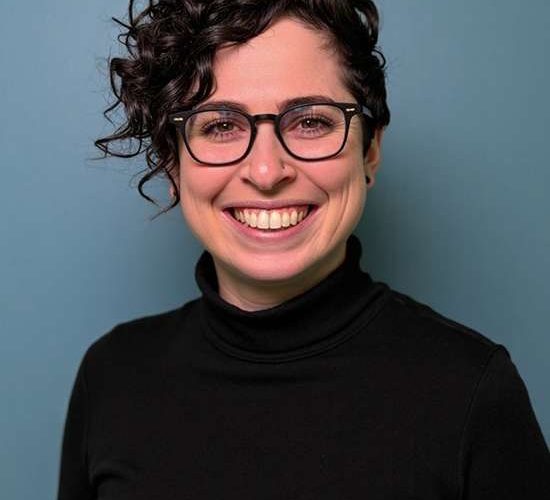
LIVE from ILADS: Tick Boot Camp welcomes back Dr. Melanie Stein, ND for an update on her approach to chronic Lyme disease and complex illness — and the release of her book, Breaking Through Chronic Illness: The Science of Cellular Repair and the Path to Lasting Recovery.
Why do some people continue struggling after months or even years of Lyme disease treatment?
Dr. Stein believes part of the answer may be found at the cellular level. In this short-form conference conversation, she explains her clinical model of repairing cell membranes, supporting mitochondrial function, reducing inflammation, calming an overactive nervous and immune system, and rebuilding the foundations of health so the body may be better prepared for treatment and recovery.
Rather than waiting until the end of Lyme treatment to focus on repair, Dr. Stein makes a different argument:
Repair may need to begin at the beginning.
This interview was recorded live at the ILADS conference, so you may hear some of the energy and background activity of the event throughout the conversation.
Why Can Lyme Recovery Stall?
Dr. Stein begins with a familiar problem in the Lyme community.
A patient is diagnosed with an infection. Treatment begins. Yet months or years later, that person may still experience fatigue, brain fog, neurological symptoms, immune dysfunction, or other persistent problems.
Dr. Stein’s clinical model asks whether focusing primarily on killing or reducing pathogens overlooks another important part of recovery:
What condition is the body in while we’re treating the infection?
She discusses oxidative stress, mitochondrial dysfunction, impaired cellular communication, inflammation, and damage to cell membranes as factors she believes can help keep chronically ill patients stuck.
Her book, Breaking Through Chronic Illness, expands on this idea by focusing on cellular repair as part of the recovery process.
Treat the Body, Not Just the Bug
This conversation connects directly with a recurring Tick Boot Camp observation.
People who recover from complex Lyme disease often appear to need more than an antimicrobial strategy.
Tick Boot Camp discusses its PARM framework:
- Prehabilitation
- Assist
- Repair
- Maintenance
Dr. Stein agrees with the importance of repair but proposes an important modification:
Don’t wait until the repair phase to start repairing.
She argues that improving the body’s cellular environment earlier may help prepare patients for subsequent interventions and make treatment more tolerable or effective.
It’s a shift from asking only, "How do we kill the pathogen?"
Instead, the question becomes:
"How do we help the body become healthier while we’re addressing the pathogen?"
What Happens to Cells During Chronic Illness?
Dr. Stein describes cell membranes as essential structures that help regulate what enters and leaves a cell and facilitate communication between cells.
She discusses phosphatidylcholine and other lipids as important components of those membranes.
Within her model, oxidative stress associated with infection can damage these fats and disrupt membrane function, cellular communication, mitochondrial function, and immune signaling.
The science can become complicated quickly, so the conversation develops a much simpler metaphor.
The Castle & Moat Metaphor
Imagine the cell is a castle.
Surrounding that castle is a moat — the cell membrane.
The moat helps determine what enters and leaves while also participating in the castle’s communication and defenses.
Dr. Stein explains that when the membrane becomes damaged, the system may no longer operate normally.
The drawbridge doesn’t work properly.
Communication systems can become impaired.
Defenses may become less effective.
The goal of cellular repair, in her framework, is to restore that protective environment so cellular communication and function can improve.
It’s an intentionally simple analogy for a complicated biological concept, but it helps explain why Dr. Stein places so much emphasis on cell membrane health.
Phosphatidylcholine & Cell Membrane Support
One intervention discussed in the episode is phosphatidylcholine.
Dr. Stein describes phosphatidylcholine as an important fatty component of cell membranes and discusses replenishing healthy lipids as part of her approach to cellular repair.
She also discusses butyrate, a short-chain fatty acid naturally produced by gut bacteria, within her broader cellular-health protocols.
These therapies aren’t presented here as universal Lyme disease treatments.
They are components of Dr. Stein’s clinical approach to patients with complex chronic illness and should be considered with an appropriately trained healthcare professional based on an individual’s medical needs.
ILADS has also featured Dr. Stein teaching on lipid replacement therapy and cellular restoration in tick-borne disease. (pathlms.com)
Calm the Body Before Pushing Treatment
Before getting into advanced cellular therapies, however, Dr. Stein emphasizes something more fundamental:
Help the body feel safe again.
Many chronically ill patients describe feeling stuck in a state of hypervigilance or fight-or-flight.
Dr. Stein discusses several tools she uses clinically to address that state, including:
- Nervous-system regulation
- Limbic-system retraining
- Mast-cell support
- Anti-inflammatory strategies
- Sleep
- Breathing exercises
- Gentle foundational interventions
She references programs including DNRS, Gupta, and Primal Trust while acknowledging an important reality: some severely ill patients may initially be too symptomatic or overwhelmed to participate in an intensive brain-retraining program.
The approach therefore needs to meet the patient where they are.
For more Tick Boot Camp conversations on nervous-system regulation, explore Primal Trust with Cathleen King.
Sleep & Digestion Come First
For all the sophisticated science discussed in the interview, Dr. Stein’s first priorities for a new patient are surprisingly basic.
Sleep and bowel function.
She emphasizes sleep because the body needs restorative time to regulate, integrate, and recover.
If someone isn’t sleeping adequately, she argues that adding increasingly complicated interventions may accomplish little because the body isn’t operating in an environment conducive to healing.
Dr. Stein also discusses evaluating patients for sleep disorders rather than assuming insomnia is simply another unavoidable symptom of Lyme disease.
That can include investigating:
- Sleep apnea
- REM sleep disorders
- Circadian disruption
- Cortisol dysregulation
- Poor sleep hygiene
She notes that sleep apnea isn’t limited to people who fit the stereotype of an older or overweight patient and says she refers patients for sleep studies when appropriate.
Practical Strategies for Better Sleep
Dr. Stein discusses several approaches she may use or recommend depending on the patient, including:
- Consistent sleep routines
- Reducing television and screens before bed
- Creating a dark sleeping environment
- Sleep masks
- Breathing exercises
- Meditation
- Gradually shifting a delayed sleep schedule
- Evaluating possible sleep disorders
She also discusses L-theanine, GABA, magnesium, and low-dose melatonin within her clinical practice.
The larger message is more important than any individual intervention:
Don’t overlook the foundations while pursuing advanced Lyme treatment.
Nutrition as Cellular Medicine
Food provides the raw materials cells need to function.
Dr. Stein emphasizes nutrient-dense foods and healthy fats as part of her cellular-repair philosophy.
She personally favors a lower-carbohydrate, ketogenic-style approach for many patients — not necessarily with the goal of maintaining nutritional ketosis, but as a way of emphasizing healthy fats alongside organic vegetables and nutrient-dense foods.
Diet, however, should be individualized.
The important principle in this conversation is that sophisticated therapies cannot replace the basic nutrients required for normal biochemical processes.
As Dr. Stein explains later in the episode, everyday choices influence biochemistry.
Movement Doesn’t Have to Mean Exercise
For someone severely ill with Lyme disease, the word exercise can be intimidating — and in some situations inappropriate.
Dr. Stein instead talks about movement at the level a patient’s body can currently tolerate.
That could mean something as simple as moving the legs while lying in bed.
Her goal is to gradually support circulation, oxygenation, mitochondrial activity, and energy production without demanding more from the body than it can currently handle.
Recovery doesn’t have to begin with a workout.
It can begin with the smallest movement the body safely permits.
Mitochondria & Energy Production
Mitochondria produce ATP, the energy cells use to perform their functions.
Dr. Stein connects mitochondrial dysfunction with common chronic illness complaints such as fatigue, poor stamina, cognitive dysfunction, and difficulty recovering from stress.
But mitochondrial support can’t exist in isolation.
If a patient remains chronically stressed, poorly nourished, sleep-deprived, or otherwise physiologically dysregulated, Dr. Stein argues that even sophisticated mitochondrial interventions may have difficulty producing durable improvement.
That brings the conversation back to the foundations:
Sleep. Nutrition. Movement. Nervous-system regulation. Cellular support.
The advanced protocols are built on top of those fundamentals — not instead of them.
Cellular Repair Before, During & After Lyme Treatment
One of the biggest takeaways from this interview is that healing doesn’t necessarily have to follow a rigid sequence.
The traditional mental model might look like:
Kill the infection → repair the damage → rehabilitate the patient.
Dr. Stein proposes something more integrated.
Support the patient before antimicrobial treatment.
Continue supporting cellular health during treatment.
Repair throughout the process.
Then continue rebuilding and maintaining health afterward.
In Tick Boot Camp language, prehabilitation, assistance, repair, rehabilitation, and maintenance can overlap rather than existing as completely separate boxes.
Breaking Through Chronic Illness
Dr. Stein’s book, Breaking Through Chronic Illness: The Science of Cellular Repair and the Path to Lasting Recovery, expands on the concepts introduced in this interview.
She wrote the book for both patients and practitioners.
Her goal is to translate complicated cellular science into language people living with chronic illness can understand while also encouraging clinicians to think beyond antimicrobial treatment alone.
The book explores her cellular-repair framework and the idea that persistent illness can involve dysfunction in cell membranes, mitochondria, energy production, detoxification, immune regulation, and cellular communication.
Learn more about Breaking Through Chronic Illness and Dr. Stein’s cellular-healing approach.
About Dr. Melanie Stein
Dr. Melanie Stein, ND is a licensed naturopathic physician and founder of Restorative Health Clinic in Portland, Oregon.
Her clinical work focuses on complex chronic illnesses including Lyme disease and other tick-borne infections, mold-related illness, MCAS, POTS, chronic fatigue, environmental illness, and cellular dysfunction.
Dr. Stein’s interest in complex chronic illness is also personal. She has publicly described developing Lyme disease and Bartonella and experiencing severe neurological illness, including paralysis, before ultimately receiving answers. That experience helped shape her focus on patients with difficult-to-diagnose and persistent illnesses.
ILADS identifies Dr. Stein as a clinician specializing in vector-borne illness and complex chronic conditions who integrates environmental medicine, chronic infection management, and individualized therapies. (ilads.org)
Key Topics in This Episode
Chronic Lyme disease, Lyme disease recovery, Dr. Melanie Stein, cellular repair, cell membrane therapy, mitochondrial dysfunction, mitochondrial health, phosphatidylcholine, butyrate, oxidative stress, chronic inflammation, chronic fatigue, brain fog, cellular communication, nervous-system regulation, limbic-system retraining, DNRS, Gupta Program, Primal Trust, MCAS, mast cell activation, sleep, sleep apnea, Lyme disease nutrition, movement, ATP production, prehabilitation, chronic illness recovery, integrative medicine, naturopathic medicine, and Breaking Through Chronic Illness.
About This LIVE from ILADS Interview
This short-form conversation was recorded in person at the 2025 International Lyme and Associated Diseases Society Annual Scientific Conference, From Terrain to Treatment: Advances in Vector-Borne Illness, held October 9–12, 2025, in San Antonio, Texas.
Dr. Stein was among the clinicians featured by ILADS at the conference, where her work focused on vector-borne illness, complex chronic disease, and cellular health.
Because these interviews were recorded live at the conference, they have a different feel from Tick Boot Camp’s traditional long-form virtual and studio conversations — shorter, focused, and surrounded by the energy and activity of ILADS.
Explore all Tick Boot Camp LIVE from ILADS interviews.
More from Tick Boot Camp
Explore more conversations with Lyme disease doctors and healthcare professionals about testing, treatment, cellular health, nervous-system regulation, and recovery.
For more on helping the nervous system move out of chronic fight-or-flight patterns, listen to Cathleen King discuss Primal Trust.
Explore the Tick Boot Camp Podcast for patient stories and interviews with doctors, researchers, advocates, and other voices working to improve understanding of Lyme disease and tick-borne illness.