LIVE from ILADS: Can treating Lyme disease be both a science and an art?
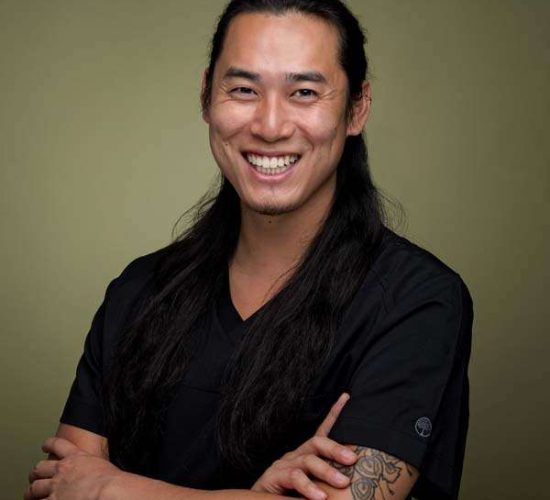
Tick Boot Camp sits down with Dr. Frank Song Jr., ND, a naturopathic doctor specializing in Lyme disease, tick-borne infections, and complex chronic illness at Placeres Integrative Medicine in New Milford, Connecticut.
But medicine is only one part of Dr. Song’s story.
He is also a professional musician and performer whose music brings together influences from his Chinese heritage, Appalachian and Americana folk traditions, R&B, soul, and his more recent experiences working with Brazilian musicians.
For Dr. Song, those worlds aren’t separate.
Medicine is an art. Music can be medicine. And healing requires understanding the individual human being in front of you.
In this wide-ranging conversation, Dr. Song shares how his upbringing in a Chinese immigrant family influenced his path into naturopathic medicine, what he learned during his Lyme disease residency under Dr. Alexis Chesney, why treating chronically ill patients caused him to reconsider how he was living his own life, and why he believes conventional and naturopathic medicine should work together rather than compete.
The conversation also takes on difficult questions about trauma, nervous-system regulation, spirituality, access to care, financial resources, hope, and the danger of reducing complex Lyme disease recovery to simplistic advice that every patient must “change.”
Dr. Song’s message is more nuanced:
Meet people where they are. Understand what is actually contributing to their illness. Give them realistic hope. And never forget that precision medicine means treating the person—not a generalized version of the disease.
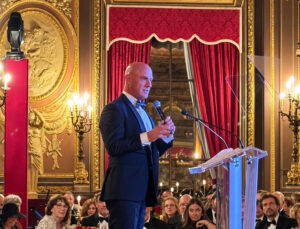
This interview was recorded live at the ILADS conference, so you may hear some of the energy and background activity of the event throughout the conversation.
From Chinese Folk Traditions to Naturopathic Medicine
Dr. Song was born in New Haven to a family that immigrated from Hunan in south-central China.
He spent part of his early childhood in China and was raised by grandparents who were farmers.
Food, herbs, seasonal changes, folk traditions, and what he describes as Eastern medicine were naturally woven into everyday life.
Looking back, Dr. Song believes those early experiences helped establish the foundation for his eventual path into naturopathic medicine.
After returning to the United States, he grew up primarily in Virginia and studied biology and anthropology on the pre-med track at the University of Virginia.
He later attended the University of Bridgeport for naturopathic medicine.
Training Under Dr. Alexis Chesney
One of the most important influences on Dr. Song’s Lyme disease education was Dr. Alexis Chesney, ND, LAc.
Dr. Song completed his residency at Sojourns Community Health Clinic in Westminster, Vermont, where he trained under Dr. Chesney.
The clinic combined primary care with naturopathic medicine, pediatrics, chiropractic care, physical therapy, acupuncture, and a specialized tick-borne disease program.
That exposed Dr. Song to both ends of the tick-borne disease spectrum:
- Acute tick bites
- Early infections
- Lyme disease
- Tick-borne co-infections
- Chronic complex presentations
- Patients requiring individualized combinations of conventional and integrative care
His current professional bio confirms that his residency specifically focused on diagnosing and treating Lyme disease, tick-borne diseases, and complex chronic illness and included pharmaceutical, herbal, and holistic approaches.
Dr. Chesney has also joined Tick Boot Camp for her own LIVE from ILADS conversation exploring Lyme disease, Babesiosis, and whole-person treatment.
What Treating Chronic Illness Taught a Young Doctor About Life
Dr. Song began his residency during COVID.
At the same time that the world was confronting illness and mortality on an enormous scale, he was working directly with chronically ill patients who were temporarily—or sometimes profoundly—losing important pieces of their lives.
Some couldn’t work.
Some struggled to parent.
Some lost mobility.
Many were confronting fear, uncertainty, illness, and questions about mortality.
Listening to those patients caused Dr. Song to ask difficult questions about his own life.
What am I doing with my time?
What would I regret not pursuing?
One answer kept coming back:
Music.
His patients’ experiences helped remind him that life isn’t only about professional achievement. People facing serious illness often think about relationships, experiences, passions, travel, creativity, and the things they wish they had made more time to pursue.
So Dr. Song decided to listen to the lesson his patients were teaching him.
Becoming Both a Doctor and an Artist
After residency and additional practice at Sojourns, Dr. Song moved to Brooklyn and shifted toward part-time clinical medicine.
He joined Placeres Integrative Medicine, where he continues to work with Lyme disease, tick-borne illness, and complex chronic illness patients.
At the same time, he dove more deeply into music.
He began performing, working with a producer in Brooklyn, touring internationally, and recording.
His musical identity draws from several different worlds.
His grandparents were East Asian folk singers, exposing him to regional Chinese folk and operatic traditions.
Growing up near Virginia’s Blue Ridge Mountains exposed him to Americana, Celtic music, and bluegrass.
He also developed a love for R&B and soul.
More recently, working and recording with Brazilian musicians added another cultural influence to his art.
He has also pursued samba dancing and describes himself in the interview as a semi-professional samba dancer.
Can Music Be Medicine?
Dr. Song believes being a musician has made him a better doctor.
Music has been a tool for expression, emotional processing, self-soothing, connection, and preserving family and cultural history.
As a physician, he can work intensely with one person.
He can investigate a case, recommend treatments, adjust a protocol, and help that individual navigate illness.
Music works differently.
It can reach an entire room—or potentially an entire community—at once.
Dr. Song sees art as a way to create connection and empathy and potentially contribute to larger shifts in how people think about themselves, each other, health, and the world around them.
His professional bio similarly describes his belief that music can be medicine and a channel for connection and healing.
Lyme Disease, Nature & Our Environment
Dr. Song also sees connections between his medicine, his art, and the natural world.
Much of his music is inspired by nature and humanity’s relationship with it.
In the interview, he connects the changing landscape of Lyme and vector-borne diseases with larger environmental and climate issues.
For him, those aren’t entirely separate conversations.
Human health exists within an ecosystem.
How we interact with the environment can influence how we interact with vectors, pathogens, food systems, stressors, and other determinants of health.
That ecological perspective fits naturally with the broader whole-person framework Dr. Song brings to medicine.
Why Naturopathic Medicine?
The conversation then explores what naturopathic training contributes to complex chronic illness care.
Dr. Song is careful not to portray naturopathic and conventional medicine as enemies.
He explicitly acknowledges the tremendous value of conventional medicine, particularly in acute care.
His concern is that highly reductionist or hyper-specialized systems can sometimes struggle when an illness spans multiple interconnected systems.
Complex Lyme disease can live in those gray areas.
A patient may be dealing with infection alongside neurological symptoms, immune dysfunction, environmental exposures, psychological stress, trauma, nutritional problems, and other factors.
Breaking everything into individual pieces can provide valuable information.
But eventually someone has to put those pieces back together.
Dr. Song believes the future requires a marriage between conventional and naturopathic medicine, using the strengths of both rather than insisting that one philosophy must replace the other.
Lyme Disease Is Not One Disease Experience
One of Dr. Song’s strongest cautions in this interview is against broad generalizations.
Two people who both say they have “Lyme disease” may have very different clinical pictures.
One may be dealing with Lyme and Bartonella.
Another may have Babesia or another tick-borne infection.
Another may have mold exposure layered into the picture.
There may be differences in immune function, environment, stress, trauma, socioeconomic circumstances, access to care, and many other variables.
That makes generalized instructions dangerous.
Dr. Song repeatedly comes back to the importance of individualized, precision medicine.
Healing Is More Than Killing an Infection
Rich and Dr. Song explore a recurring Tick Boot Camp theme:
For many people, recovery from complex chronic illness eventually becomes about more than targeting pathogens.
Physical health matters.
But so can emotional health, nervous-system regulation, environment, relationships, stress, trauma, beliefs, purpose, and lifestyle.
Dr. Song has additional training in mind-body medicine and holistic counseling.
He describes studying with Dr. Moshe Block and becoming a Vis Dialogue practitioner, a counseling approach within a naturopathic framework.
That background has influenced the way he thinks about connections between emotional experiences and physical health.
But this is where the conversation becomes especially nuanced.
A Critical Warning About Blaming Patients
Dr. Song strongly cautions against turning mind-body medicine into another way of blaming chronically ill people.
Telling someone:
“You just need to change.”
“You need to regulate your nervous system.”
or
“Your trauma is why you’re still sick.”
can itself become harmful.
Dr. Song emphasizes that Lyme and tick-borne disease cases can be extraordinarily complex.
The infection is real.
The patient’s physical illness is real.
And people have vastly different resources and circumstances.
Rather than imposing one healing philosophy onto everyone, he advocates identifying what may actually be modifiable for that particular person.
Is there an environmental component?
Is work creating unsustainable stress?
Is trauma relevant?
Is there an infection or co-infection requiring treatment?
Is nervous-system support appropriate?
What can realistically be changed right now?
That is very different from blaming someone for being sick.
Access to Lyme Care Matters
Dr. Song also raises a difficult reality in the Lyme community:
Specialized care can be expensive.
Patients are sometimes told they need highly personalized treatment, extensive testing, supplements, specialty doctors, lifestyle changes, nervous-system programs, or other interventions.
But not everyone can afford those resources.
Dr. Song argues that a genuinely humanistic approach has to acknowledge those limitations.
A clinician shouldn’t prescribe an idealized version of healing that exists outside the patient’s financial, educational, social, or practical reality.
Instead:
Meet the person where they are.
Then determine what meaningful changes are actually accessible to them.
His current practice is notable in this context because Placeres Integrative Medicine describes itself as an insurance-based integrative practice working to make naturopathic and root-cause care more accessible.
Does Healing Require Money?
This leads to a thoughtful exchange between Rich and Dr. Song.
Rich shares what Tick Boot Camp has observed after hundreds of patient interviews: financial resources can provide access to additional tools, but money alone does not explain who ultimately improves.
Tick Boot Camp has repeatedly heard stories in which purpose, belief, emotional change, persistence, lifestyle, and a person’s evolving relationship with illness become important pieces of recovery.
Dr. Song doesn’t reject that.
Instead, he adds another layer.
Money and access do matter, particularly up to the point where someone can obtain basic resources and appropriate care.
Beyond that, more money doesn’t necessarily mean more healing.
Both ideas can be true.
Resources matter.
And healing cannot be reduced to resources alone.
Avoiding Toxic Positivity
Dr. Song makes another important distinction:
Hope should be realistic.
He cautions against telling every chronically ill person that if they simply think differently, change enough, or believe hard enough, complete recovery is guaranteed.
Some illnesses can leave lasting damage.
Some patients may experience irreversible sequelae.
And clinicians have a responsibility to distinguish between realistic hope and false hope.
That doesn’t mean abandoning hope.
It means respecting the patient’s reality.
Dr. Song warns against what he calls a “toxically positive” approach that unintentionally places responsibility for persistent illness back onto the patient.
For Tick Boot Camp, the takeaway is important:
Belief that healing is possible should empower people—not shame them when recovery is difficult.
Precision Medicine, Not Generalization
Near the end of the conversation, Dr. Song summarizes his clinical philosophy in a few words:
Precision medicine.
Complex chronic illness doesn’t lend itself to broad assumptions.
Patients don’t all overlap neatly.
Their histories differ.
Their exposures differ.
Their infections differ.
Their resources differ.
Their physiology differs.
Their goals differ.
That means clinicians have to investigate, analyze, listen, and continuously adapt.
And that is where Dr. Song believes medicine becomes an art.
The Art of Lyme Healing
The episode closes where Dr. Song’s two worlds—medicine and art—come together.
If every Lyme patient could be treated with one generalized protocol, medicine would be more like painting with a single brushstroke.
But that’s not reality.
The artistry comes from:
Piecing together the clues.
Analyzing the individual case.
Choosing appropriate tools.
Understanding the human being.
Building trust.
Medicine requires science.
But applying that science to a unique person requires judgment, curiosity, empathy, and connection.
That is the art.
And for Dr. Song, it’s the same humanistic thread running through both the clinic and the stage.
About Dr. Frank Song Jr., ND
Dr. Frank Song Jr., ND is a licensed naturopathic doctor specializing in Lyme disease, tick-borne diseases, and complex chronic illness at Placeres Integrative Medicine.
Dr. Song completed specialized residency training under Lyme and tick-borne disease specialist Dr. Alexis Chesney at Sojourns Community Health Clinic in Vermont. His clinical interests include pharmaceutical, botanical, nutritional, and holistic approaches to tick-borne illness as well as mind-body medicine and the mental, emotional, and spiritual dimensions of health.
He is also a professional musician who has performed internationally and views music as another avenue for connection, expression, and healing.
Key Topics in This Episode
Lyme disease, Dr. Frank Song, naturopathic Lyme doctor, Lyme disease treatment, tick-borne disease, chronic Lyme disease, Lyme disease co-infections, Bartonella, naturopathic medicine, integrative medicine, precision medicine, personalized Lyme treatment, mind-body medicine, nervous-system regulation, limbic system, trauma and chronic illness, holistic medicine, Lyme disease recovery, Lyme disease and mental health, Lyme disease and spirituality, access to Lyme care, cost of Lyme treatment, toxic positivity, realistic hope, music and healing, Dr. Alexis Chesney, Placeres Integrative Medicine, ILADS, and whole-person Lyme treatment.
About This LIVE from ILADS Interview
This short-form conversation was recorded in person at the 2025 International Lyme and Associated Diseases Society Annual Scientific Conference, From Terrain to Treatment: Advances in Vector-Borne Illness, held October 9–12, 2025, in San Antonio, Texas.
ILADS introduced Tick Boot Camp to Dr. Song as one of the younger physicians working in the Lyme and tick-borne disease field, giving Rich the opportunity to explore not only his medical training but the unusual intersection of medicine, art, culture, and healing that shapes his work.
Because these interviews were recorded live at the conference, they have a different feel from Tick Boot Camp’s traditional long-form virtual and studio conversations—shorter, focused, and surrounded by the energy and activity of ILADS.
Explore all Tick Boot Camp LIVE from ILADS interviews.
More from Tick Boot Camp
Explore conversations with Lyme disease doctors and healthcare professionals about individualized treatment, integrative medicine, complex chronic illness, and recovery.
For more conversations about nervous-system regulation and the role it can play as one component of recovery, listen to Cathleen King on Primal Trust.
Explore the Tick Boot Camp Podcast for patient stories and interviews with doctors, researchers, advocates, and other voices working to improve understanding of Lyme disease and tick-borne illness.