LIVE from ILADS: What happens when a board-certified medical doctor develops debilitating symptoms — but doesn’t recognize that she may have Lyme disease?
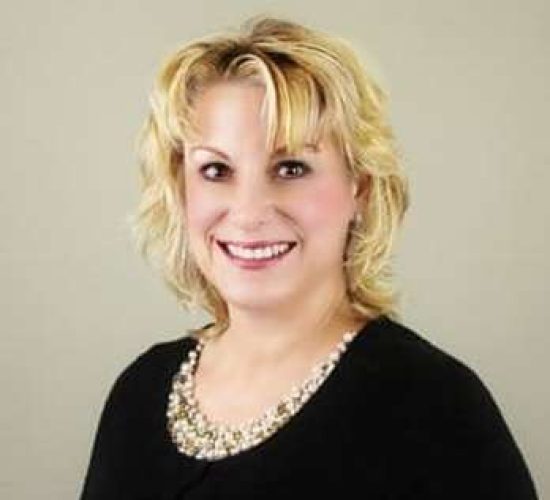
Tick Boot Camp sits down with Dr. Robin Ann Ridinger, MD, a physician board-certified in both Family Medicine and Integrative Holistic Medicine who treats Lyme disease and other complex chronic illnesses at Premier Health and Holistic Medicine in Leesburg, Virginia.
Before Dr. Ridinger became a Lyme-treating integrative physician, she became the patient.
While going through a difficult period in her life, she began experiencing cognitive problems severe enough that she feared she might be developing early Alzheimer’s disease and would have to retire from medicine.
Then she attended a Lyme disease conference.
As she listened to the symptoms being described, she remembers repeatedly thinking:
"That’s me."
That experience changed not only her health journey but the way she practices medicine.
In this conversation, Dr. Ridinger discusses why her conventional medical training didn’t prepare her to recognize Lyme disease in herself, what she learned from becoming a patient, why complex chronic illness often doesn’t fit into short medical appointments, and how lived experience helps her understand symptoms such as air hunger, profound fatigue, and brain fog.
The episode also explores integrative medicine, nutrition, mitochondrial health, individualized treatment, and one of the hardest skills in chronic illness care:
Knowing when a patient needs compassion and rest — and when they may need a gentle push beyond a plateau.
This interview was recorded live at the ILADS conference, so you may hear some of the energy and background activity of the event throughout the conversation.
A Doctor Who Didn’t Recognize Her Own Lyme Disease
Dr. Ridinger was already a trained and experienced physician when her own health began deteriorating.
She describes experiencing cognitive problems so concerning that she feared early Alzheimer’s disease.
Yet Lyme disease wasn’t on her radar.
That changed when her employer encouraged her to attend a Lyme conference.
Sitting in the audience and listening to the symptoms being discussed, Dr. Ridinger suddenly recognized herself in what she was hearing.
She subsequently found an ILADS-associated physician who evaluated her and, because of the limitations and cost of testing at the time, treated her based substantially on her clinical presentation.
Dr. Ridinger says she improved considerably after approximately nine months involving different antibiotic protocols.
Her physician then told her about opportunities to mentor with doctors experienced in treating Lyme disease.
She pursued that training and eventually began helping other patients facing the same kinds of problems she had experienced herself.
Why Didn’t Medical School Prepare Her for Lyme Disease?
Rich asks an obvious question:
How could a medical doctor fail to recognize Lyme disease in herself?
Dr. Ridinger’s answer is remarkably simple.
She says Lyme disease was barely part of her medical education.
During her Family Medicine residency in Columbus, Ohio, other emerging infectious diseases received considerable attention, but she recalls essentially no meaningful education about Lyme disease.
Without that framework, her collection of symptoms didn’t naturally lead her toward a Lyme diagnosis.
Her experience illustrates a challenge frequently described by Tick Boot Camp guests:
You can’t easily recognize a pattern you’ve never been taught to look for.
From Conventional Medicine to Integrative Medicine
Lyme disease wasn’t Dr. Ridinger’s only reason for moving toward integrative medicine.
Even before her own Lyme journey, questions surrounding her children’s health had pushed her to look beyond conventional approaches.
She describes struggling to reconcile symptoms and laboratory results and becoming frustrated when the medical system didn’t provide satisfactory answers.
That led her toward deeper study of nutrition, hormones, physiology, and eventually integrative medicine.
Today, Premier Health and Holistic Medicine describes her approach as personalized care that considers the whole person rather than isolated symptoms. Her practice includes Lyme disease and co-infections, mold toxicity, chronic fatigue, fibromyalgia, hormone and thyroid disorders, digestive problems, autoimmune conditions, and cognitive and mood symptoms.
Why Complex Chronic Illness Doesn’t Fit Into a 15-Minute Visit
One of the most interesting parts of the interview isn’t specifically about Lyme disease.
It’s about the structure of modern medicine.
Dr. Ridinger describes always wanting more time with patients.
She didn’t want to cut people off.
She wanted to listen, investigate, research, and understand how seemingly disconnected problems might fit together.
At one point, she viewed that as a weakness.
She thought she was simply too slow.
Eventually, she realized the opposite may have been true.
For complex chronic illness, taking time can be a strength.
Acute Care vs. Chronic Care
The conversation makes an important distinction between acute medicine and complex chronic illness care.
Conventional medicine can be extraordinary when someone needs emergency care, surgery, stabilization, or treatment for a clearly defined acute problem.
But someone with years of multisystem symptoms presents a very different challenge.
Dr. Ridinger describes how medical specialization and insurance-driven time constraints can fragment care.
The cardiologist sees the heart.
The neurologist sees the nervous system.
The gastroenterologist sees the digestive tract.
The psychiatrist sees mood and behavior.
But who has enough time to ask how everything might connect?
Dr. Ridinger argues that complex patients require a more integrated view.
The Problem With Medical Silos
Dr. Ridinger remembers an earlier period of medicine when primary-care doctors and specialists communicated more collaboratively about complicated cases.
She believes increasing time pressure and changes in the insurance-driven medical model have contributed to greater specialization and fragmentation.
That becomes particularly problematic when the illness doesn’t remain inside one organ system.
Lyme disease and other complex chronic illnesses may involve neurological, cardiovascular, gastrointestinal, immune, musculoskeletal, endocrine, and psychiatric symptoms.
Treating each symptom as an unrelated problem can make it harder to see the larger pattern.
For Dr. Ridinger, integrative medicine is partly about putting those pieces back together.
What Changes When the Doctor Has Been the Patient?
Dr. Ridinger’s own Lyme disease experience gives her another kind of medical education:
lived experience.
She knows what certain difficult-to-describe symptoms actually feel like.
That doesn’t mean a doctor must personally have Lyme disease to become an excellent Lyme clinician.
But Dr. Ridinger believes her own illness helps her recognize nuances that might otherwise be difficult to understand from a textbook.
One example is air hunger.
Understanding Air Hunger
Air hunger is a symptom frequently discussed by people with Babesia and other complex illnesses.
A patient may not walk into a doctor’s office saying:
"I have air hunger."
Instead, they may say their breathing feels shallow or that suddenly they’re unusually winded doing something that was easy days earlier.
Because Dr. Ridinger experienced air hunger herself, she can sometimes recognize what a patient is trying to describe even when the patient doesn’t have the vocabulary for it.
She describes the strange experience of taking the same walk and being able to breathe normally one day, then becoming disproportionately winded another day despite no meaningful change in fitness.
That lived experience helps her ask more precise follow-up questions.
Lyme Fatigue Isn’t Ordinary Tiredness
The same distinction applies to fatigue.
Someone without chronic illness may hear the word fatigue and think:
"I’m tired too."
Dr. Ridinger describes something very different.
During severe illness, fatigue can reach the point where it feels physically difficult to make the body move.
She contrasts that with the normal tiredness she may still experience today.
The words may be the same.
The experience isn’t.
That distinction can matter when a patient is trying to explain an invisible symptom to someone who has never experienced it.
When Brain Fog Becomes Disorientation
Dr. Ridinger also shares a frightening example of neurological dysfunction.
She remembers being at a stop sign near a church she had attended for approximately 20 years and suddenly becoming disoriented:
Where am I?
Her children were with her.
The experience frightened them.
This was more than occasionally forgetting a word or walking into a room and forgetting why.
It was significant cognitive dysfunction in a familiar environment.
Experiences like these helped shape the physician she eventually became.
Peel Back the Onion
Dr. Ridinger describes complex Lyme disease care using a familiar metaphor:
Peeling an onion.
Not every problem can be addressed simultaneously.
Treatment becomes a process of identifying layers, supporting the body, reassessing, and deciding what should come next.
One practical tool she uses is asking patients:
What are the top three symptoms you most want to improve?
That question gives patients a voice in establishing priorities.
It also helps turn an overwhelming list of symptoms into something more manageable.
Progress can then be evaluated according to what matters most to that particular person.
Nutrition Is Part of the Treatment
Dr. Ridinger also places significant emphasis on nutrition.
She says patients in her practice receive education about healthy eating, liver function, detoxification pathways, and ways of reducing toxic exposures.
Her current practice similarly identifies healthy eating, detoxification, comprehensive testing, herbal treatments, and personalized treatment plans as parts of its integrative approach.
Dr. Ridinger’s philosophy is that these foundations aren’t separate from treatment.
They are part of creating an environment in which the body has a better opportunity to recover.
Adrenals, Mitochondria & Energy
The conversation also explores adrenal and mitochondrial dysfunction.
Dr. Ridinger notes that symptoms can overlap considerably, making it difficult to assign every experience to one system.
Mitochondria are particularly important because cells depend on them for energy production.
The brain is extraordinarily energy-demanding.
That provides part of the physiological context for why energy dysfunction is frequently discussed alongside fatigue and cognitive symptoms in complex chronic illness.
Rather than assuming one pathway explains every symptom, Dr. Ridinger’s approach is to look at the patient’s broader physiological picture.
Knowing When to Push — and When Not To
One of the most human parts of this conversation involves something no laboratory test can easily determine:
When should you push a chronically ill patient?
Recovery can require patience.
Someone who is extremely sick may genuinely need rest, stabilization, compassion, and small deliberate steps.
Pushing too hard can be counterproductive.
But patients can also reach plateaus.
Fear can develop after years of symptoms and setbacks.
Someone who has repeatedly experienced negative consequences from exertion or treatment may understandably become afraid of trying something new.
The clinician’s challenge is determining when the patient needs permission to rest — and when the patient may be ready for the next carefully measured step.
Rich describes this as a kind of wisdom that can’t simply be learned from a textbook.
For clinicians who have personally lived through chronic illness, that instinct may be informed by their own experience of being on both sides of the exam room.
New Tools for Patients Who Remain Stuck
Dr. Ridinger is also continuing to explore emerging tools for patients who reach difficult plateaus.
She discusses growing interest in areas including:
- Photobiomodulation
- Vagus nerve regulation
- Polyvagal approaches
- Quantitative EEG, or qEEG
- SPECT imaging
- Mitochondrial health
- Nervous-system regulation
She is particularly interested in whether some of these tools can provide additional information or options for patients who have already "done the circuit" of experienced practitioners without fully recovering.
Her willingness to continue learning reinforces one of the major themes of this interview:
We don’t know what we don’t know.
Healing Requires Curiosity
Dr. Ridinger’s story ultimately isn’t only about Lyme disease.
It’s about what happens when a doctor becomes a patient and discovers the limitations of the medical framework she was originally taught.
Her response wasn’t to abandon medicine.
It was to expand her toolbox.
She studied integrative medicine.
She pursued Lyme disease mentorship.
She learned from her own illness.
She continued researching.
And she created a practice where complex patients can have more time to tell their stories.
That curiosity is especially valuable for people who have spent years hearing:
"Your tests look normal."
"I don’t know what’s wrong."
Or:
"There’s nothing else we can do."
For patients with complex chronic illness, sometimes the next step begins with a clinician willing to keep asking questions.
About Dr. Robin Ridinger
Dr. Robin Ann Ridinger, MD is a board-certified Family Medicine and Integrative Holistic Medicine physician and founder of Premier Health and Holistic Medicine in Leesburg, Virginia.
She earned her medical degree from the University of Iowa and completed her Family Medicine residency at Grant Medical Center in Columbus, Ohio. Her practice focuses on personalized integrative care for complex conditions including Lyme disease and co-infections, mold toxicity, chronic fatigue, fibromyalgia, autoimmune disease, digestive disorders, hormonal and thyroid dysfunction, and cognitive and mood symptoms.
Dr. Ridinger is affiliated with the International Lyme and Associated Diseases Society (ILADS), and her practice describes her approach to Lyme disease as integrating conventional and holistic strategies around the needs of the individual patient.
Key Topics in This Episode
Lyme disease, Dr. Robin Ridinger, Lyme disease doctor, integrative Lyme treatment, Lyme disease misdiagnosis, chronic Lyme disease, Lyme disease brain fog, Lyme fatigue, Babesia, air hunger, Lyme disease and mitochondria, integrative medicine, functional medicine, holistic medicine, complex chronic illness, chronic fatigue, mitochondrial dysfunction, adrenal dysfunction, nutrition, detoxification, Lyme disease recovery, photobiomodulation, vagus nerve, polyvagal theory, qEEG, SPECT scan, patient-centered medicine, medical education, ILADS, and Lyme disease treatment.
About This LIVE from ILADS Interview
This short-form conversation was recorded in person at the 2025 International Lyme and Associated Diseases Society Annual Scientific Conference, From Terrain to Treatment: Advances in Vector-Borne Illness, held October 9–12, 2025, in San Antonio, Texas.
Because these interviews were recorded live at the conference, they have a different feel from Tick Boot Camp’s traditional long-form virtual and studio conversations — shorter, focused, and surrounded by the energy and activity of ILADS.
Rich and Dr. Ridinger also discuss bringing her back for a future long-form Tick Boot Camp interview so the many subjects introduced here can be explored in greater depth.
Explore all Tick Boot Camp LIVE from ILADS interviews.
More from Tick Boot Camp
Hear more conversations with Lyme disease doctors and healthcare professionals about diagnosis, treatment, integrative medicine, and recovery.
Explore the science and discussion surrounding Lyme disease persistence.
Visit the Tick Boot Camp Podcast for patient stories and interviews with doctors, researchers, advocates, and other members of the Lyme disease and tick-borne illness community.