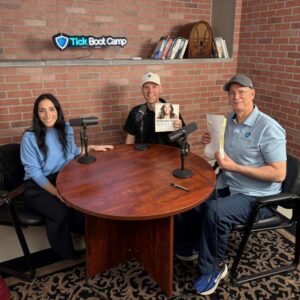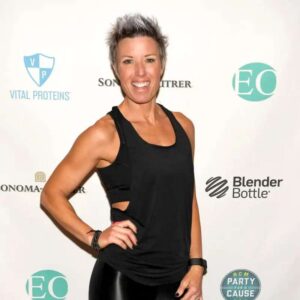

In this episode of the Tick Boot Camp Podcast, Matt Sabatello sits down with Yuri Kim, the lead clinical research nurse for MIT’s MAESTRO study, described as one of the largest studies in MIT history focused on Lyme disease and Infection-Associated Chronic Illnesses (IACI). Yuri explains how MAESTRO is collecting deep symptom histories and objective measurements—from eye tracking and EEG/P300 auditory testing to NASA Lean dysautonomia testing, capillaroscopy, and multi-sample biological collection—to identify patterns that validate patient experiences and accelerate real-world clinical understanding.
Yuri’s story is equally compelling: she began as an ER nurse in a Level 1 trauma center, transitioned into research nursing (including neurodegenerative and traumatic brain injury work), moved to South Korea during the pandemic, and ultimately joined MIT after a conversation with Dr. Mikki Tal changed the course of her career. Throughout the conversation, Yuri shares what she’s learned from MAESTRO participants: a community often exhausted and dismissed, yet profoundly motivated to help others and drive scientific progress forward.
Key Takeaways (Fast Scan)
-
MAESTRO is nearing ~200 participants enrolled, with the chronic Lyme cohort full and enrollment closing soon.
-
The study aims to objectively measure symptoms often dismissed as “anxiety” or “depression,” especially brain fog and dysautonomia.
-
MAESTRO uses multiple cognitive and neurologic measures, including RightEye eye tracking, EEG + P300 auditory “oddball” testing, and remote cognitive battery tests.
-
The team added capillaroscopy (nailfold and toe microvascular imaging) to explore vascular patterns and hemorrhages in chronic illness cohorts.
-
Dysautonomia testing includes NASA Lean Test plus an earpiece device to estimate proxy cerebral blood flow, sometimes showing abnormalities even when vitals look “normal.”
-
Extensive biological sampling (oral, blood, vaginal/rectal) supports proteomics/immune profiling and deeper molecular analysis.
-
Yuri emphasizes: patients’ willingness to participate—despite severe symptoms—is the engine of progress and future change.
Detailed Chapter-by-Chapter Show Notes
1) Meet Yuri Kim: The Human Side of Cutting-Edge Lyme Research
Matt introduces Yuri as the clinical research nurse leading day-to-day operations of MIT’s MAESTRO study—positioning her as a rare bridge between lab science, clinicians, and patients. Yuri shares that the study is approaching enrollment completion and that the team is eager to analyze a large dataset to “speak up” for participants who have suffered without clear explanations.
Highlights:
-
MAESTRO is one of MIT’s largest studies, with enrollment nearing completion.
-
The mission is to transform patient suffering into measurable signals, data, and insight.
2) Yuri’s Background: Pharma, ER Nursing, Research, and Why This Work Became Personal
Yuri explains her path: early work as a medical information specialist in pharma (including literature searches and clinician guidance, often involving off-label questions), then an intense period as a Level 1 ER nurse where she witnessed both acute crises and chronic illness desperation.
Key insight:Yuri notes that in pharma and ER settings, she repeatedly saw the same reality—patients searching for answers, clinicians constrained by time, and chronic illness voices falling through the cracks.
3) From the ER to Neuro Research: Brain Inflammation, TBI, and the Gap in Chronic Illness Care
Yuri left ER work largely due to the physical toll of night shifts and moved into academic research at Boston University. She worked on complex studies involving Alzheimer’s, amyloidosis, and traumatic brain injury.
Matt asks whether Lyme came up in those neuro settings. Yuri says no—but now she views neurodegenerative symptoms differently and believes clinicians should consider underlying root causes, including infection.
Listener connection:This segment reinforces how often Lyme-related cognitive decline can be misinterpreted or missed when viewed through siloed specialties.
4) Lyme Awareness Outside the U.S.: South Korea, Tick-Borne Illness, and Global Blind Spots
During the pandemic, Yuri relocated to South Korea. She shares that Lyme isn’t commonly discussed there, though other tick-borne illnesses exist. Yuri underscores a global concern: agricultural and rural communities face tick exposure without awareness of the chronic implications.
5) How Yuri Joined Dr. Mikki Tal and MAESTRO (And Why She Changed Her Mind)
One of the most memorable segments: Yuri reveals she had already accepted another MIT nursing role—but after speaking with Dr. Tal, she pivoted immediately, calling it the best career decision she’s ever made.
Why it matters: It shows how MAESTRO is not just a study; it’s a mission-driven effort that attracts top clinical talent.
6) Day One at MAESTRO: Meeting the Severely Ill and the Community’s Unmatched Generosity
Yuri recounts a powerful early experience: meeting a participant who was bedbound and profoundly symptomatic, yet eager to contribute anything possible to help the community.
Matt connects this to Tick Boot Camp’s origin story: people with minimal energy still showed up to help others. The theme becomes clear—Lyme patients are often depleted but relentlessly generous.
What MAESTRO Measures (The Four-Hour Visit Breakdown)
7) Brain Fog: Why MAESTRO Treats It as a Complex Phenomenon
Yuri explains MAESTRO’s approach: brain fog isn’t one symptom. It can involve memory, processing speed, visual stimulation sensitivity, pain-triggered cognition changes, and motor response delays.
Core idea: MAESTRO attempts to measure brain fog from multiple angles—visual processing, auditory processing, reaction time, and executive function.
8) RightEye Eye Tracking: Visual Stimulus + Reaction Time as Objective Signal
Participants complete a structured set of ocular motor tasks (pursuit, saccades) and reaction-time games (shape recognition mapped to numbered inputs). Yuri notes many chronic illness participants struggle even with basic saccades, often aligning with reported visual disturbances.
What MAESTRO is measuring:
-
Ocular motor control
-
Visual processing
-
Decision speed
-
Reaction time consistency
9) EEG + P300 “Oddball” Test: Auditory Processing Meets Motor Output
Participants wear an EEG cap (19 regions) and listen to tones: common low-pitch and rare high-pitch. They must press the spacebar only for the rare tone. Yuri notes that even a 4-minute test can be exhausting for people with cognitive dysfunction, and participants often describe a frustrating “delay” between knowing what to do and physically doing it.
Why this matters: This may help validate cognitive dysfunction even when standard office screening looks normal.
10) Remote Cognitive Battery Testing: Scaling Measurement Beyond MIT
Participants complete executive function tests at home (memory, Stroop-like color-word matching, trail-making tasks). Yuri emphasizes why this matters: many patients can’t travel, and symptoms vary dramatically by day, cycle, and crash patterns.
Big future direction: Remote testing could expand access to bedbound patients and capture “good day vs bad day” variability.
11) Dysautonomia & POTS: NASA Lean Test + Proxy Cerebral Blood Flow
Yuri details NASA Lean testing: supine rest, then standing/leaning while monitoring vitals and symptoms. The standout: sometimes vitals appear stable while patients feel intensely symptomatic—yet the cerebral blood flow proxy measurement fluctuates significantly.
Clinical implication discussed: This approach could become a tool for identifying dysautonomia-related issues when standard vitals “look fine.”
12) Capillaroscopy: Nailfold + Toe Microvascular Imaging
MAESTRO added capillaroscopy to examine microvascular patterns, including abnormal shapes and possible hemorrhages seen more frequently in chronic cohorts (as her clinical observations suggest). They also measure capillaries pre- and post-NASA Lean to explore whether symptomatic shifts correlate with microvascular changes.
Why patients find it meaningful: They can visually see something measurable that aligns with how they feel.
13) Standard Neuro Screening Doesn’t Capture Lyme Brain Fog
Yuri shares a crucial point: participants often perform fine on standard screens like the Mini-Mental State Exam, suggesting that infection-associated cognitive dysfunction can be subtle, dynamic, and not detected by traditional tools—reinforcing the need for MAESTRO-style measurement.
Biological Samples: “Measure Everything” (Head to Toe)
14) Multi-Sample Collection: Oral, Blood, Vaginal, Rectal
Yuri explains the breadth of biological sampling, including saliva/oral samples (cotton chew + gum swab), multiple blood tubes, and sex-specific sampling to explore immune, hormonal, microbiome, and gynecologic dimensions.
Why it’s being done: To connect symptom clusters to molecular patterns and explore sex differences in chronic illness response.
15) Storage, Batch Effects, and What Happens After Enrollment Closes
Samples are aliquoted and stored at -80°C until they can be processed/shipped in ways that minimize batch effects. The next phase is analysis and collaboration—including proteomics and immune signaling exploration.
16) Giving Back to Participants: The Challenge and the Intention
Yuri acknowledges the “fine line” between research-only testing and clinically actionable reporting, but stresses MIT’s intention to return what can be responsibly shared through certified partners—while being careful not to over-interpret research findings.
Collaboration, Scaling, and What Comes Next
17) Collaboration Across Institutions: The Missing Platform
Matt compares Lyme research needs to cybersecurity threat-sharing between banks: competitors collaborate because the threat is bigger than any one organization. Yuri agrees and highlights the need for secure data-sharing platforms—similar to large national efforts in other fields.
18) What’s Next: Focus on Female Brain Fog, Hormones, and Remote Studies
Yuri previews upcoming directions:
-
Brain fog and hormone cycle relationships
-
Differentiating infection-associated cognitive dysfunction vs menopause-related brain fog
-
Remote/at-home measurement studies to reach more symptomatic and bedbound patients
-
Potential collaborations with pediatric and neuroimmune experts
Closing Message: Hope Without Hype
Yuri’s message to patients and families is simple and emotional: “Please don’t give up.” She believes answers are coming because serious teams are working together—and because patients are driving the research forward with their participation.